Saturday, March 29, 2008

Panasonic invests in home networking chip developer

"Japanese congloerate Panasonic has invested an undisclosed sum in wireless home networking control chip developer Zensys AS, joining previous backers such as Intel Capital and Cisco.
Zensys (Copenhagen, Denmark and Fremont, Calif.) said it will use the funding to further its penetration into the home automation and control market.
Zensys' Z-Wave RF-wireless home-control protocol is being pushed to replace directional IR in a variety of home networking applications including lighting, appliances, HVAC, entertainment centers, and security systems. It is often seen as an alternative to the ZigBee home and industry networking standard."

Friday, March 28, 2008

Rafat: WMA’s New Fund: The MailRoom Fund

WMA’s New Fund: The MailRoom Fund
By Rafat Ali - Thu 27 Mar 2008 11:16 PM PST
So that’s the name, I found out: William Morris Agency, which announced its then un-named fund along with Accel Partners and Venrock, now has a name for it: The MailRoom Fund. The explanation: rising from the mailroom...David Geffen, Barry Diller, and Mike Ovitz did, as did others. Richard Wolpert, the former president of Disney Online and the chief strategy officer at RealNetworks, is heading the fund. No investments done yet, but it is only three weeks old.
For good measure, here’s the book about rising from the mailroom in Hollywood: “’The Mailroom: Hollywood History from the Bottom Up’: David Rensin
----------
"Updated below: As we have been covering for a while now, the talent agencies here have exploring and raising funds to become de facto venture capital firms themselves, mainly to invest in digital entertainment in the Southern California region. Now William Morris Agency is first off the gates: it is launching a fund along with Silicon Valley VC firms Accel Partners and Venrock, and has an unusual limited partner in the form of AT&T (NYSE: T), reports NYT.
Richard Wolpert, the former president of Disney (NYSE: DIS) Online and the chief strategy officer at RealNetworks (NSDQ: RNWK), is heading the fund...he has been working with Accel as a venture advisor for at least a year now. The fund’s size is in tens of millions of dollars, and the funding will mainly be in seed rounds in digital media companies, though they will look at larger investments if needed. Also, though the geographic focus is here in SoCal, they could consider other areas as well.
For the VC firms, it is about bridging the tech vs entertainment divide. David Siminoff, GP at Venrock, said, helpfully “The ethos of this fund is about reducing the friction...Hollywood people are not stupid. They are just not technology people.” Thanks guys.
Meanwhile, Susan Johnson, the SVP for business development at AT&T, will be working with the alliance on AT&T’s behalf. It is hoping to invest mobile content and mobile advertising technologies. The company has invested in film financing firm Media Rights Capital before (along with WPP), but that has been more passive.
As for the CAA’s $150 million fund that we reported on first here, we have heard things might have slowed down a bit as the economy slows down. "


Thursday, March 27, 2008

ClusterSeven ADM Software Improves Monitoring of Activities within Microsoft Office Access

"ClusterSeven today announced the availability of its ClusterSeven ADM software product, designed to help organizations reduce operational risk by closely monitoring the activity and changes to data in their Microsoft® Office Access databases. Laws and regulatory bodies such as the Sarbanes-Oxley Act (SOX) in the United States and the Financial Services Authority in the U.K. require organizations to demonstrate oversight on business records and communications. ClusterSeven ADM enables ClusterSeven customers such as European Credit Management to comply with the most stringent interpretations of these requirements and with their own internal governance, risk and regulatory compliance (GRC) policies.

Microsoft Office Access, formerly Microsoft Access, is a relational database management system and part of the 2007 Microsoft Office system. ClusterSeven ADM provides an organization with detailed oversight of records created and managed in Access, and monitors these activities with no impact to the end user. ClusterSeven ADM saves time by removing many manual checks, creates a centralized and auditable history and clearly separates the roles of the business users and operational risk managers, all key requirements of most compliance legislation including those established by SOX and the FSA. ClusterSeven ADM draws on the proven architecture of ClusterSeven's Enterprise Spreadsheet Manager Software product, which provides the same oversight capabilities over an organization's spreadsheets created using popular programs such as Excel and Google Docs.

"Use of Microsoft Office Access is typically not as widespread throughout an organization as spreadsheets, but that does not reduce the operational risk to the entire organization," said Steve Semenzato, founder and CEO, ClusterSeven. "Just one instance of poor oversight can trigger an investigation. Auditors and regulators require a precise understanding of who touched what information, when and why. ClusterSeven's technologies monitor these activities and alerts appropriate personnel of anything suspicious, without disrupting daily business operations."

SAP Ventures and European Founders Join Intel Capital to Complete $15 Million Investment in iovation

" iovation, the device reputation authority for the Internet, today announced it has successfully completed a $15 million investment round by securing growth capital from SAP Ventures, the corporate venture capital arm of SAP AG (NYSE: SAP: 48.80, -3.13, -6.02%), and European Founders, a leading investor for emerging growth companies looking to expand into Europe. The two companies join Intel Capital, Intel's global investment group, as iovation's initial group of investors.

"We are extremely excited about our new relationships with SAP Ventures, European Founders and Intel," said Greg Pierson, CEO of iovation. "These companies are well established, recognized leaders in the global market. They've built strong business relationships in Europe and Asia and have the market expertise that supports iovation's ambitious growth plan into these strategic markets. There is a tremendous amount of synergy between our entire team of investors and we look forward to the business opportunities these partnerships will create for iovation."

iovation pioneered the first device reputation service that provides real-time fraud and abuse protection for a number of verticals including online retail, financial services, Internet gaming and online social networking sites. Using patented technology, iovation exposes known fraudsters and abusers, and their relationships between suspicious devices, so they can no longer hide behind multiple identities to perpetrate online fraud and abuse. Customers sharing iovation's network of device reputation intelligence are better equipped to prevent online fraud and abuse while increasing operational efficiencies and business revenues through more precise risk management."

Wednesday, March 26, 2008

Bubble Motion Closes $14 Million in Second Round Funding

"Bubble Motion Closes $14 Million in Second Round Funding

Receives Investment from Sequoia Capital, Comcast Interactive Capital, and NCD Investors

Mountain View CA, 26 March 2008: Bubble Motion, the pioneer and global leader of 'voice SMS', today announced $14 million in additional funding from existing investors Sequoia Capital US and Sequoia Capital India, as well as new investors Comcast Interactive Capital and NCD Investors.

This additional funding will allow the company to further develop and expand the award-winning BubbleTALK platform, and will enable the company to focus on securing additional operator partnerships around the world.

Over 135 million consumers currently use the BubbleTALK service, which provides a 'click, talk, and send' short voice messaging service that works on any mobile phone. Operators have been implementing the BubbleTALK service because it gives them a fun and easy-to-use new service that increases Average Revenue Per User (ARPU) without the need for any additional network infrastructure.

Gaurav Garg, Sequoia Capital US, said "Bubble Motion has continued to impress us with their developments over the past year and a half. With a solid track record of success, a seasoned and experienced leadership team in place, and some phenomenal usage statistics, it is not surprising that the company received so much interest from the VC community."

Tom Clayton, CEO of Bubble Motion, commented: "We are thrilled that Comcast Interactive Capital and NCD Investors have joined with Sequoia as new investors. This new capital will enable us to accelerate even more aggressively on our global expansion goals. Moreover, Comcast Interactive Capital will add a new perspective and hands-on help to the executive team as we continue our aggressive expansion. With the upcoming new product releases and phenomenal traffic growth, we look forward to some very exciting times ahead. I'm very pleased that both our new investors and our existing investors share that vision."

As part of the financing, Deepak Sindwani, Principal at Comcast Interactive Capital, has joined Bubble Motion's Board of Directors. "We are impressed by the viral subscriber and traffic growth of the BubbleTALK service globally and excited by its potential as a new communication and media-oriented service," said Sindwani. "Comcast has a strong interest in developing leading-edge, multi-platform communications technologies."

Reuters: GGV raises total capital managed above $1 bln

"Granite Global Ventures, which focuses on expansion-stage investments, said on Wednesday it had increased its third fund to $600 million, bringing its total capital under management to more than $1 billion.
GGV, which invests in the Internet sector, services and manufacturing, is also increasing its focus on consumer-related investments in China, its partners said at a media briefing.
'China's rapidly growing consumer economy presents a tremendous opportunity for us to build on the success of our expansion-stage investment strategy,' said Hany Nada, co-founder of GGV.
GGV also said four partners in SIG Capital in Shanghai had joined the firm. SIG Capital continues to manage Venture Star Shanghai, a Chinese-foreign joint venture licensed to invest yuan-denominated venture capital in China and now a GGV affiliate."

Sunday, March 23, 2008

TradeVibes Gets $900k For Startup Database | paidContent.org

"TradeVibes, a Mountain View, CA-based wiki for info on startups, has raised a $900,000 seed round, says VentureBeat. Investors include Ron Conway, Dave McClure, the Kinsey Hills Group and Felicis Ventures. Not only is the site seeking to build a thorough startup database (fundings, management, etc.), it’s hoping to become a community site, where people can debate topics or even source deals. The site has a similar feel to Wikinvest, which focuses on public companies. CEO and co-founder David Li was previously at PayPal."

Chinese Gaming Site 9You Receives $100 Million Investment | paidContent.org

"Chinese online games operator 9You has received $100 million in equity investment from Temasek Holdings and other investment institutions. The investment came after 9You’s launch of GTown, a virtual world integrating 9You’s existing online games. 9You says the investment will help the company to continue transforming its business into an entertainment virtual community. Founded in 2003, 9You is currently operating one of China’s most popular online casual games Audition. By February 2008, the company’s games combined have more than 1 million peak concurrent users. The company is planning an IPO later this year."


JPMorgan in Negotiations to Raise Bear Stearns Bid - New York Times

JPMorgan Chase was in talks on Sunday night for a deal that would quintuple its offer for Bear Stearns, the beleaguered investment bank, in an effort to pacify angry Bear shareholders, according to people involved in the negotiations.

Tuesday, March 18, 2008

Meebo (and Bebo) worth more than Bear Stearns

Paid Content:


"Mountain View, CA-based Meebo, the popular web-based IM service, is out raising a $25-$30 million round at a $200-$250 million valuation, reports VentureBeat. That’s up from a previous valuation of $60-$70 million, when it raised $9 million from DFJ last year. As for the current round, the word out of the company is an unsurprising ‘no comment.’ If true, the raise is a bellwether for big, later-stage rounds in the current market environment. Not only is the valuation seen as high, but the service is still seen as service or a product, rather than a solid business. Down at SxSW, I had a chat with co-founder Sandy Jen, and business development director Daniel Bernstein, during which they made the case that Meebo is a real business with real potential for revenue. At the conference, Meebo chat served as the backchannel for all the panels, a demonstration of the company’s strategy to power live interaction and chat in any context:

-- Ads Not surprising: the core revenue idea at this point is based around ads. Jen: “The biggest revenue piece right now would be advertising… we have this thing called bubble ads on Meeb.com”. It claims that for every 100 people that log into Meebo, three of them click on an ad. As for ads that are relevant to the actual conversation, Bernstein promised that the company is not about to pull a Beacon: “We’re a lot less grandiose in that regard.” In terms of numbers, the company claims 7.5 million uniques at Meebo.com and another 22 million across the network.

-- Premium services: Another avenue that the company is exploring is digital goods, a la QQ, the Chinese IM based virtual currency. Users, for example, might pay for advanced features: stuff like skins and avatars are the most obvious. Besides paid premium services, there’s also opportunity for sponsorship, according Jen: “You could have sponsorships… like the Coke skin of the day.” But for now, the large bulk will still be advertising. "


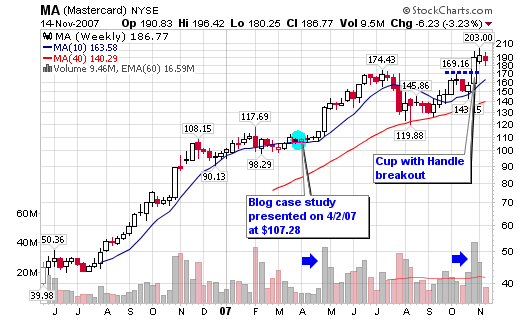
Flashback May 2007: Mastercard IPO Success (Visa Prices IPO Shares at $44

MasterCard Soars in First Day After Initial Offering (Update4)
2006-05-25 16:20 (New York)

"May 25 (Bloomberg) -- Shares of MasterCard Inc., whose
initial public offering raised less than its backers had hoped,
soared as much as 18 percent in the first day of trading.
MasterCard rose $7 to $46 in New York Stock Exchange
composite trading. The world's No. 2 credit-card company raised
$2.39 billion in yesterday's IPO and priced its shares at $39
each, a dollar less than its minimum forecast.
``We've seen some choppiness in the market in the last few
weeks, and ultimately the market decides what a company is
worth,'' said Robert Selander, chief executive officer of
MasterCard, in an interview. ``So we decided we'd go with a price
where the market said it should be.''
The market for IPOs, which has been running at its fastest
pace in six years, stumbled yesterday when shares of Vonage
Holdings Corp., the money-losing Internet phone company, dropped
13 percent. It was the worst debut for an initial share sale in
six months, and the stock fell another 12 percent this afternoon.
CMC Markets Plc, a London-based foreign-exchange broker, and
Alsea SA, which owns the Mexican franchise rights for Domino's
Pizza, postponed their offerings today because of falling equity
markets."


Is venture capital's love affair with Web 2.0 over? | Tech news blog - CNET News.com

"Silicon Valley remains the hotbed of Web 2.0 activity, but the hipness of start-ups with goofy names is starting to cool in the face of economic reality.
Dow Jones VentureSource on Tuesday released numbers of venture capital activity in Web 2.0 companies and declared that the 'investment boom may be peaking.'
Venture capitalists put $1.34 billion into 178 deals in 2007, an 88 percent jump over 2006. But once you strip out the $300 million that Facebook raised from Microsoft and others, the numbers don't look as bullish.
The pace of deal flow, or the number of fundings, has slowed, particularly in the San Francisco Bay Area. Deal flow in 2007 went up 25 percent to 178 deals, but nearly all of those occurred outside the Bay Area, where the number of deals slipped downward.
'Web 2.0 deals in the Bay Area actually dropped from 74 deals in 2006 to 69 last year and investments were down 3 percent from the $431 million invested in 2006. It's clear that the real growth in the Web 2.0 sector is happening outside of the Bay Area,' Jessica Canning, director of global research at Dow Jones VentureSource, said in a statement."

Quattrone is back

" Frank Quattrone, a leading adviser on initial public offerings during the Internet boom and a target of investigators after it collapsed, is starting his own firm focused on technology companies.
The former Credit Suisse banker, who was cleared of obstruction of justice charges in August, said in an e-mail statement today that his Qatalyst Group will advise on mergers and acquisitions and make investments alongside venture-capital and private-equity funds.
Quattrone will be joined by Jonathan Turner, former global head of Credit Suisse's Internet group; Neil Chalasani, vice president in the technology group at M&A advisory firm Evercore Partners Inc.; and Adrian Dollard, former general counsel to Credit Suisse's technology group who served as witness for Quattrone in his trial.
The firm plans to advise technology companies on financing and capital structure and raise private capital for selective clients, the release said. The firm won't do research, sales, trading or brokerage.
Qatalyst has applied to register as a broker-dealer with the U.S. Securities and Exchange Commission and for membership in the Financial Industry Regulatory Authority, the self-regulatory body known as Finra. Until the applications are approved, the team will operate as a division of JMP Group Inc., a San Francisco- based investment bank.
IPO Adviser
Quattrone, head of Credit Suisse First Boston's technology banking group from 1998 to 2003, has said he helped 175 companies with IPOs, including Amazon.com Inc. and Cisco Systems Inc. He earned more than $200 million from August 1998 to the end of 2001.
The government case against him grew out of a probe of whether banks rigged initial public offerings by demanding kickbacks for access to shares in demand. The IPO investigation was one of several federal civil and criminal probes of corporate malfeasance following the 2001 collapse of Enron Corp.
Quattrone was accused in April 2003 of hindering the government's investigation of Zurich-based Credit Suisse, Switzerland's second-largest bank, by endorsing a subordinate's e-mail that advised employees to ``clean up'' their files.
Quattrone won his exoneration after two trials. The first ended in a hung jury in 2003. The second resulted in a conviction for obstruction of justice and witness tampering in 2004. He was sentenced to 18 months in prison before an appeals court last year reversed the conviction.
Prosecutors decided not to re-try him and dropped the case last August. The banker didn't pay a fine, serve time in prison or agree to restrictions on his work. He admitted no wrongdoing.
Quattrone started working at Morgan Stanley in 1979 and became its head of technology investment banking in 1990. After 17 years with the firm, he moved to Deutsche Bank AG in 1996. He joined Credit Suisse in July 1998. Two weeks later, more than 130 Deutsche Bank investment bankers, analysts and other staff followed him there. "

Monday, March 17, 2008

MapJack - Your City Online

IDG Ventures closes fund, becomes Flybridge Capital

"IDG Ventures Atlantic has closed its third and largest-ever fund, and it has changed its name to Flybridge Capital Partners.

The Boston-based VC firm raised a $280 million fund, up from its $180 million second fund that closed in 2005, general partner Jeff Bussgang said.

Founded in 2001, IDG changed its name to Flybridge Capital Partners to avoid being confused with the media-focused International Data Group, its parent company, and to reflect a strategy that's more diverse that just media investments, Bussgang said.

The closing of the Flybridge Capital fund raises the firm's total capital under management to $560 million. The fund, which had a target of $250 million, was oversubscribed, Bussgang said.

The additional capital, , he said, is manageable because the firm has expanded its number of general partners from three to five. Flybridge's general partners include Bussgang, David Aronoff, Michael Greeley, Chip Hazard and Jon Karlen.

The firm, specializing in the consumer, health care and information technology markets, will continue to invest in early-stage companies with investments of $6 million to $12 million apiece, Bussgang said. IDG Ventures Atlantic is part of a network of six IDG funds, including IDG Ventures San Francisco and IDG Ventures Vietnam, the first-ever tech venture fund in that Southeast Asian country.

Since a flybridge is the highest navigational point on vessel, the name Flybridge was selected because it's a metaphor for giving entrepreneurs a different perspective on their companies, he said. "

AP: JPMorgan Chase buys crisis-hit Bear Stearns for 236 mln dlrs

"In a shocking deal reached on Sunday to save Bear Stearns, JPMorgan Chase agreed to pay a mere $2 a share to buy all of Bear — less than one-tenth the firm’s market price on Friday.

As part of the watershed deal, JPMorgan and the Federal Reserve will guarantee the huge trading obligations of the troubled firm, which was driven to the brink of bankruptcy by what amounted to a run on the bank.

Reflecting Bear’s dire straits, JPMorgan agreed to pay only about $270 million in stock for the firm, which had run up big losses on investments linked to mortgages.

JPMorgan is buying Bear, which has 14,000 employees, for a third the price at which the smaller firm went public in 1985. Only a year ago, Bear’s shares sold for $170. The sale price includes Bear Stearns’s soaring Madison Avenue headquarters."


Thursday, March 13, 2008

All Things Idol: ibeatyou | Baron Davis is a co-founder!

"This is the official ibeatyou group! This is a group for anyone that is competitive or has any type of talents they want to share with the community. If you have any talents and know you're good, this is the group for you. The site, which is located at www.ibeatyou.com is currently in private invite only alpha and will be slowly opening up over time. Members in this group will also receive early private invites to the site. Co-Founders of ibeatyou include Baron Davis (Golden State Warriors Basketball Star), Cash Warren (Entertainment Guy) and Abdul Khan (Internet Nerd)."


Carlyle Group asserts fund losses will not spread

"Carlyle Group, the U.S. private equity firm run by David Rubenstein, said Wednesday that losses at its $16 billion mortgage-bond fund would not hurt the company's 59 other private equity and venture capital funds.

The $150 million credit line Carlyle Group extended to Carlyle Capital Corp. was provided by the firm's executives, not investors in its private equity and venture capital funds, the Washington firm said. The partners own about 15 percent of Carlyle Capital, or CCC."


Wednesday, March 12, 2008

Mr Funny or Die Will Ferrell: Your next seed investor

Searchme's latest round of capital includes investors Sequoia, DAG Partners and private investors including actor Will Ferrell.


Cnet: Searchme nabs $31 million from Google backer, others

Visual Search Engine Searchme Gets $31 Million, Launches Beta

Searchme, a new search engine that delivers results as a browsable stack of preview pages, and provides suggestions of categories as users type search terms


Sunday, March 09, 2008

USA Today: Tony Hawk leaps to top of financial empire

"Skateboarding legend Tony Hawk moves with the power and grace of a jungle cat. As heavy metal rock blasts in an industrial office building here, he swoops down a steep, two-story-high skateboarding ramp that would spook most people.
Other skateboarders hanging with Hawk whoop at his high-flying moves. For two decades, Hawk dominated the ESPN X Games and other competitions. Now 40, he's retired from competing."

"But the tall, lean Hawk can still bring it during extreme sports shows around the world — or in these daily afternoon practices with his pals, who also are top skateboarders. They say Hawk nails tricks in 10 to 15 minutes that take them days to master.

"I put a lot of pressure on myself," Hawk says recently at his corporate offices here. "I always try to perform at my best."

"Hawk, like Tiger Woods and Michael Jordan, belongs to that rare breed of athlete-entrepreneurs whose names and brands have transcended their sports and become mainstream icons in the popular culture.

With his marketing savvy and wholesome looks, family man Hawk introduced an outlaw street sport to the suburbs and shopping malls, helping to turn skateboarding into a multibillion-dollar industry. In the past decade, Hawk has made many millions of dollars from licensing and marketing deals with his popular Activision video games, with skateboard gear and clothing, and with corporate sponsors, including Jeep and McDonald's. (MCD)

Now, Hawk is gliding into the next stage of his career. He hopes to keep growing his brand as a force in the media, entertainment and retail fields with fresh products and endorsements, from new video games to roller coasters at Six Flags (SIX) amusement parks.

Hawk's moves come as his name recognition among young consumers ranks No. 1 of all U.S. athletes, surpassing NBA basketball greats Shaquille O'Neal and LeBron James, according to Research International USA's TRU. "

Yahoo! Finance: Google shares could fall another 20% to 350

"Google Inc, whose shares have plunged more than 40 percent since November, could fall almost another 20 percent due to the U.S. economic slowdown and aggressive spending by the Internet search engine company, according to the latest issue of Barron's.
'While a short-term bounce might follow the stock's swift descent, the shares are likely to head even lower if analysts start slashing their earnings estimates to reflect today's tougher operating environment, as they should be doing,' the report said.
The article's headline questioned whether Google shares, which closed on Friday at $433.35, could be headed below $350."

SFGate: Aging Boomers could burst housing bubble

"The common perception among economists is that the current housing bubble will be a relatively short-term affair that should see a return to normal within the next few years.

But according to a study by two University of Southern California researchers, a bubble of even more monumental proportions lies just ahead. They call it the "generational housing bubble," and maintain that it will be fueled by the same Baby Boomers who have been bidding up prices since 1970 as they moved higher and higher on the housing ladder.

Now, though, the 78 million Boomers are about to enter the years when people tend to become sellers rather than buyers. And as a result, they expect "many more homes (will be) available for sale than there are buyers for them."

According to the researchers, the tilt toward age groups that are net sellers of housing is unprecedented. "The Baby Boom generation was born over a period of 18 years, and once its sell-off commences, it could dominate the housing market for up to two decades," they say.

As the elderly become more numerous than the young, and as they shift into seller mode, the researchers postulate, the market shift could come quickly after 2010, causing housing prices to fall."

Friday, March 07, 2008

Yahoo! News: MobiTV seeks to shut down Web forum

"MobiTV Inc., which provides TV services on Sprint Nextel Corp. cell phones, is trying to shut down a Web forum that is carrying instructions on how to get access to its channels for free.

ADVERTISEMENT

MobiTV sent a letter to Howardforums.com, asking the site to take down links that provide MobiTV streams from Fox News, MSNBC, Animal Planet and other networks when entered in the Web browsers of certain phones.

After Howardforums refused to comply, MobiTV sent a letter Thursday to the site's Web host, Atlanta-based Global Net Access LLC, asking that it shut down Howardforums.

The letters were provided to The Associated Press by Howard Chui, owner of Toronto-based Howardforums.

Calls to MobiTV and Global Net Access were not returned. The site was still up on Friday afternoon, and Chui said Global Net Access had not been in touch with him.

Sprint charges $9.99 per month for access to 100 MobiTV channels.

Toronto-based Howardforums.com has 795,000 users, of whom 200 are paying, according to Chui. It is focused on cell phones and cell carriers.

In an e-mail, Chui said he has complied with cease-and-desist letters from copyright owners before, when users posted pirated software. But in this case, he said, the posting simply contains links to MobiTV's Web site, which is accessible to anyone on the Internet.

"These feeds do not appear to be protected in any way, and it appears anyone with a compatible phone can view them," Chui wrote in a posting. He questioned why MobiTV was operating its service without authenticating its subscribers.

A MobiTV lawyer responded that the specific MobiTV Web address was obtained in violation of the company's intellectual property rights, according to Chui."

EETimes: Magma acquires analog IP specialist Sabio Labs

"Magma Design Automation Inc. said Wednesday (Feb. 27) it has acquired Sabio Labs Inc., an analog intellectual property provider.
Terms of the deal were not disclosed.

Magma (San Jose, Calif.) said Sabio's analog IP process migration technology will be incorporated into its Titan Mixed-Signal Design Platform. The platform targets analog IP process migration and mixed-signal design.

Magma said Sabio's design approach translates design expertise into reusable designs that eliminate the need to run thousands of simulations.

A circuit design manager at Mitsubishi Electric was quoted by Magma as saying the Japanese chip maker was "using Sabio [technology] to migrate our analog IP to 45-nanometer" designs.

Sabio Labs is based in Mountain View, Calif.

Magma resolved a long-running patent dispute with Synopsys Inc. last March, paying its EDA rival $12.5 million to settle all pending litigation. At the time of the settlement, industry observers said the deal would clear the way for Magma to begin making acquisitions. "

Thursday, March 06, 2008

Internet News: HP Refocuses Labs On Winning Projects

"HP is refocusing its Labs research arm, paring down the number of projects it has going while putting more effort into the ones it thinks will pay off, the company announced at an event here at its corporate headquarters.
HP Labs has produced many of the company's best-known products, from the first pocket-sized scientific calculator to thermal inkjets. But along the way, the computer giant's research efforts have got a little defocused. With 23 labs total in seven locations around the world, the company had more than 150 projects going on, some of which were going nowhere.
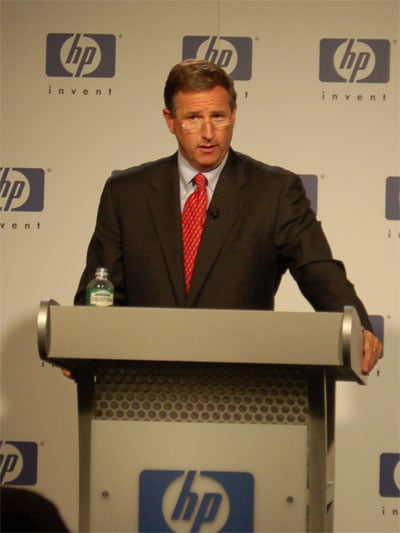
"This is a total team HP effort, not just an HP Labs effort. We expect HP Labs to be at the forefront and we will be a lot more transparent on the research we are working on and keeping you up to date on things we have coming," said Chairman and CEO Mark Hurd, who spoke only briefly at the event.
So the company is paring down and focusing on the winners, and bringing in the marketing department to help give the engineers and developers a better shot at making their inventions commercially viable. "By putting the entire focus of HP Labs onto 20 or 30 big bets, we hope to solve the most complicated problems facing our customers in the next decade and driving HP's growth," said Prith Banerjee, senior vice president of research at HP (NYSE:HPQ) and director of HP Labs.
To assist the researchers in making the right bets, HP has established an internal review board consisting of top technologists and researchers to transform these technologies into something deliverable to the marketplace. "


Wednesday, March 05, 2008

Los Angeles Times: CEO Raven-Symoné, 22 yrs old, worth $400M

"THE future head of the would-be Raven-Symoné Enterprises or Raven-Symoné Inc. sits in a Toluca Lake diner, chewing ice out of a plastic cup, outlining her plans for world domination.

'I want to have a record label and a licensing company,' declares Raven-Symoné. 'I want to have a publishing company and a management company where I can launch all kinds of artists. I want to do everything.'

After a brief pause, Raven-Symoné delivers the bottom line, without a trace of irony: 'I want to be Disney.'"

"For the 22-year-old star -- who started out at 5 years old on "The Cosby Show" and was featured in several TV series, such as "Hangin' With Mr. Cooper," before landing as the star and producer of the Disney Channel series "That's So Raven" and "The Cheetah Girls" movies -- it's a distant goal but a very real ambition.

As for now, she'll be content with conquering the big screen.

Next up is Walt Disney Pictures' "College Road Trip," which hits theaters Friday. She plays Melanie Porter, an energetic 17-year-old who finds her plans for a "girls only" road trip to check out prospective universities upended by her overprotective father (Martin Lawrence).

Her character is a mature extension of her aggressively loopy, rubber-faced character, who is at the center of the longest-running series on the Disney Channel (the comedy, which wrapped production in 2006 after four seasons, airs daily on the cable network and on Saturday mornings on ABC). The success of "That's So Raven" and its related merchandise prompted Ebony magazine last year to dub her "The $400 Million Woman" (just the mention of that label makes her cringe). "College Road Trip" also boosts her filmmaker credentials -- she is an executive producer and had script input on many of the exchanges between the two main characters."


Ziff Davis Files Bankruptcy, Gets $24.5M to “Restructure”

"Trade media company Ziff Davis has been in over its head for some time now. Things weren’t looking too good when the company lost Patrick Norton to Revision3 and sold off its Enterprise Division, and has seen a downward turn on the financial end, with debt restructuring and a seemingly damning decision to not pay its debt. Things have become even more dismal, with Ziff Davis electing to file Chapter 11 petitions for Bankruptcy, according to Paid Content.
This is a last ditch effort to restructure the debt of the company, and Ziff Davis has made an agreement with an ad hoc group of holders representing more than 80% in principal amount of its Senior Secured Notes, for getting the company’s debt down. Ziff Davis will continue operating its web properties, which include 1Up, PCMag and Digital Life, but filing for bankruptcy gives the company a chance to dig itself out. Ziff Davis will continue to work on the improvement of its overall company, in what looks to be a possible restructuring of its business model."

Tuesday, March 04, 2008

Pequot Ventures now FirstMark Capital..

"Pequot Ventures to Become FirstMark Capital
NEW YORK: Pequot Capital Management, Inc. and Pequot Ventures, the New York City-based venture capital arm of Pequot Capital, today announced that they have decided to separate their businesses, effective June 30, 2008. As part of the separation, the investment principals of Pequot Ventures will form a new firm, FirstMark Capital, L.L.C. FirstMark will assume the investment management operations of Pequot Ventures and, with investor approval, will take on full responsibility for the assets currently under the management of Pequot Ventures.
“Our venture business has been functioning as an autonomous entity for some time and this separation is the next logical step for both Pequot Capital and Pequot Ventures’ successful yet distinct businesses,” said Larry Lenihan, Managing Director and co-head of Pequot Ventures. “As a separate entity, we will be better positioned to pursue our investment agenda and develop new opportunities unique to our business.”
Over the course of its 11 year history, Pequot Ventures has become a leading New York City venture capital firm with a national reach. Pequot Ventures focuses on companies with a novel business or operational model that are creating new markets or changing existing industries. A critical element of its investment strategy is that Pequot Ventures is the first institutional investor in the vast majority of its investments, enabling closer involvement with portfolio companies and more significant potential upside for limited partners.
“We are very excited for this new phase of our business and enter it with tremendous momentum: in the last 18 months we closed our seventh fund, completed eight successful exits and made twelve investments, including five in New York City-based companies,” said Jerry Poch, Managing Director and co-head of Pequot Ventures. “We remain fully committed to cultivating energetic, high impact partnerships with our portfolio companies that extend beyond the boardroom, bringing extensive operational knowledge, financial savvy, and crucial business connections.”
FirstMark’s four managing directors – Larry Lenihan, Jerry Poch, Amish Jani and Rick Heitzmann – have worked at Pequot Ventures for more than seven years. Two venture partners, Larry Wilson and Sterling Phillips, will contribute additional operational depth to a staff of 12 investment professionals, supported by a strong team of operations professionals.
About Pequot Capital Management
Pequot Capital Management, Inc. is a multi-billion dollar U.S. registered investment adviser founded in 1998 by Arthur J. Samberg, Chairman and Chief Executive Officer, to manage the Pequot Family of Funds, which began investing in 1986. With offices in Connecticut, New York, California and London, Pequot offers a diverse range of investment products tailored to the needs of domestic and offshore investors, with an institutional quality infrastructure and an extensive proprietary research platform. For more information, visit www.pequotcap.com
About Pequot Ventures
Pequot Ventures, the New York City-based venture capital arm of Pequot Capital with nearly $2.0 billion in capital commitments and approximately $1.0 billion in capital under management and uncalled capital, is focused on today’s most dynamic and innovative technology companies. For more than a decade, Pequot Ventures has partnered with talented entrepreneurs and experienced managers to build market-leading companies. Pequot Ventures brings energy, insight and substantial sector expertise to its portfolio companies to create competitive, sustainable businesses and long-term value. For more information, visit www.pequotventures.com "

Monday, March 03, 2008

RedHerring.com:Handango Handed $9.5 Million

"Handango on Monday said it picked up $9.5 million in a third round of funding from investors interested in its smart phone content distribution.
Hurst, Texas-based Handango boasts smart phone content deals with 16,000 developers. The startup offers software and games for users of devices operating Palm, Windows Mobile, BlackBerry, Symbian, Linux, PSP, or Tablet PC.
Investors in the funding round included Institutional Venture Partners, Advanced Technology Ventures, Centerpoint, NeoCarta, Pharos Capital Group, and SSM Partners
“This new round of funding will further enhance Handango's plans for growth and expansion at a time when the market is ripe for infiltration,” IVP General Partner Sandy Miller said in a statement.
The funding will be used to boost the company’s efforts in distribution, build its technology, and expand. "


Microsoft-Yahoo combo could mean one fewer exit for upstarts | Tech news blog - CNET News.com

"But if Microsoft and Yahoo join forces, as many suspect they will, that means there's one fewer buyer of start-ups or midsize companies ideal for acquisition. That's at least the buzz among some venture capitalists and angel investors during a relatively quiet time in the merger talks.
'I'd prefer a healthy Microsoft and a healthy Yahoo again competing against Google because it keeps a more vibrant acquisition market,' said Geoff Yang, a general partner at Redpoint Ventures, a backer of companies such as Wiki company JotSpot (bought by Google), Right Media (bought by Yahoo) and Sidekick maker Danger (being bought by Microsoft).
As everyone analyzes whether a Microsoft-Yahoo merger makes sense, behind the scenes, investors and start-ups are questioning how the landscape may change without one of Silicon Valley's regular acquirers and a potentially more distracted duo. (In the last six months, for example, Yahoo has bought three companies backed by Redpoint, according to Yang.) Yahoo, Google, and Microsoft--and to a broader extent, Viacom, News Corp., Liberty Media, and InterActiveCorp--buy a handful of companies annually as a way to stay on top of the latest technology trends and bring on new talent."

Just look at their track records.

Since September 2001, Google has bought an estimated 60 companies ranging in price from $500,000 to $3.1 billion. (Wikipedia has recorded 51 Google acquisitions and investments in that time, but a few companies undoubtedly didn't make the list, given the search giant's low-key acquisition strategy.) In the last seven years, Google has bought an average of just fewer than nine companies annually.
Google's tried-and-true acquisition strategy is to buy young companies with a good idea and talented engineers. Only five of those Google acquisitions were for more than $100 million, including last year's whopping $3.1 billion DoubleClick deal, which is still pending. The meatier deals, from older to most recent, were Applied Semantics ($100 million), DMarc Broadcasting ($102 million), YouTube ($1.65 billion), FeedBurner ($100 million), and Postini ($625 million).
In the last 10 years, Yahoo has acquired an estimated 57 companies, according to records kept on Wikipedia, but that number is likely lower than the total too. Yahoo's acquisition price tags have typically been higher than Google's, with roughly 15 buyouts at more than $100 million.
One of its largest was $5.04 billion for Broadcast.com at the height of the dot-com bubble. The Internet company typically buys several small companies, along with a few larger acquisitions annually. Other notables include Overture Services in 2003 ($1.63 billion) and Delicious in 2005 (unknown sum).
In the last 12 years, Microsoft has bought more than 100 companies, according to Wikipedia records. That number could be higher, but at that rate, its annual average is comparable to Google's. Over that time, Microsoft hasn't focused on buying small Silicon Valley companies--last year, for example, it was noted for buying ad agency Aquantive for $6 billion and wireless-phone service Tellme for an estimated $750 million. But it seems to be shifting that strategy of late.
This year, three of its four acquisitions have been private companies from Silicon Valley, including two virtualization software makers, Calista Technologies and Caligari, along with Palo Alto-based Danger, creator of the T-Mobile Sidekick.


Sunday, March 02, 2008

Burnham:Microsoft/Yahoo: A Bad Deal For Silicon Valley: Take II

""That said, I still think that Microsoft's acquisition of Yahoo is still a net negative from an M&A perspective. Yes, it's certainly not the end of the world, but on the whole and on the average it's never a positive thing to have an active, well endowed, acquirer removed from the mix. Yahoo may not have been buying 50 start-ups a year, but they were still one of the most active Internet acquirers not just in terms of deals, but also in terms of bids. Indeed the most important party in any deal is not the actual buyer but the second place bidder and Yahoo had seemed to make a career out of being the second place bidder lately. Finally, thanks to its huge market capital, massive traffic and strong (although not relative to Google) monetization platform, Yahoo is one of the few Internet acquirers who have the luxury of being able to easily drop $50-$100M on a "feature" without really thinking about it. I totally agree with Mark that if you are building a "feature" with the intent of getting acquired by Yahoo or whoever, you were likely doomed to failure a long time ago, but at same time, the cynic in me has seen a lot of "features" get funded in the valley over the past two years often under the assumption that if they get enough eyeballs one of the big three M&A fairies will swoop in and drop $100M just to "keep up with the Joneses"."

Saturday, March 01, 2008

Yahoo: Tellme's tale as Microsoft subsidiary

"Mike McCue hasn't talked to Yahoo Inc. co-founder Jerry Yang since Microsoft Corp. ambushed the Internet pioneer with an unsolicited takeover bid a month ago.

But McCue would like his old friend to know that becoming a Silicon Valley subsidiary of the world's largest software maker can work out well.

Becoming a cog in a corporate machine isn't something McCue had in mind during the eight years that he spent building Tellme, which makes the technology behind directory assistance and other voice-controlled services. It ranks as Microsoft's largest Silicon Valley acquisition so far.

After Tellme began making money in 2004, McCue envisioned the Mountain View-based company would remain independent so it could eventually make an initial public offering of stock.

But his feelings changed after Microsoft's chief executive, Steve Ballmer, persuaded him to fly up to Seattle to meet two days before last year's Super Bowl.

After being assured that Tellme would be able to retain its Silicon Valley office, identity and quirky culture, McCue negotiated an $800 million sale to Microsoft and agreed to stay on as general manager. It's a decision that he says he doesn't regret 10 months into the marriage.

"We are pretty much doing everything we were doing before — just a lot more of it," said McCue, 40.

Because of the vast differences in size, the Tellme deal obviously isn't an apples-to-apples comparison to Microsoft's proposed $40 billion acquisition of Yahoo, which contends it's worth even more money despite a two-year earnings slump.

If the deal eventually gets completed as most analysts anticipate, combining Microsoft's online services with Yahoo's sprawling Internet franchise is expected to be a complicated and painful process that will probably involve significant layoffs.

In contrast, Tellme was so small that its payroll has expanded slightly since the Microsoft acquisition, to 360 employees.

But Tellme's experience as a Microsoft subsidiary so far indicates the Redmond, Wash.-based company's pledge to preserve Yahoo's brand, spirit and Silicon Valley presence may not be an empty promise.

Tellme's warehouse-like office located along some railroad tracks about six miles north of Yahoo's Sunnyvale headquarters looks pretty much like it did during a visit seven years ago. Some workers dart down the aisles on scooters and patio-style umbrellas loom over desks made out of doors bought from Home Depot.

"We were a little skeptical when Microsoft first bought us, but they really do seem to value our talent and the DNA our of our company," said Sarah Caplener, a Tellme employee since she got out of college seven years ago.

Caplener and other employees aren't thrilled with the added layers of bureaucracy that the Microsoft ownership has wrought. There are also regular trips to Redmond, Wash., a journey some would rather not have to make.

But Microsoft's executives sometimes make it easier by coming to Tellme. Microsoft Chairman Bill Gates even paid a visit last August and spent several hours swapping ideas with the Tellme engineers responsible for programming a system that provided voice-automated responses to about 2 billion phone calls last year.

The Gates session is just one example why Tellme employees believe they are helping Microsoft develop technology that's more elegantly designed and easier for customers to use, said Peter Monaco, Tellme's director of application engineering. "We feel like we are having as much of an influence on Microsoft as they are having on us."

McCue's background made it seem unlikely that Tellme would ever end up being sold to Microsoft.

Before starting the company in 1999, McCue struck it rich as a vice president of technology for Netscape Communications, the Web browser pioneer that helped open up the Internet to the masses.

Netscape fell on hard times, though, after Microsoft began bundling its Web browser into its ubiquitous Windows operating system, relying on tactics that a federal judge later determined were illegal.

The U.S. Justice Department's case against Microsoft was driven in large part by complaints from Netscape and other Silicon Valley companies that contended the software maker had abused its monopoly power to compensate for a lack of innovation.

But McCue said he got over any hard feelings long ago as he got to know more Microsoft engineers and even hired some of them to work at Tellme before he sold the company.

Even former Netscape CEO Jim Barksdale says he doesn't hold any grudges against Microsoft. As an early investor in Tellme, Barksdale said he was thrilled when McCue told him about Tellme's sale to his old nemesis.

"I am one of Microsoft's biggest fans," Barksdale said. "They are a wonderful company and their cash looked good to me. Every deal is different, but this one was great for Tellme."

Microsoft so far hasn't been able to lure Yang, who is also Yahoo's chief executive, to the negotiating table.

If Yang doesn't come around, Microsoft has indicated it will try to oust him and Yahoo's other nine board members in a hostile takeover attempt. Microsoft has until March 14 to nominate an alternate slate of directors.

Like many other Silicon Valley observers, McCue expects Yang to sit down with Ballmer before then, unless Yahoo is successful in its efforts to line up a better deal.

"A really great entrepreneur ultimately has to follow the best path forward for the employees, shareholders and the vision that you are pursuing," McCue said. "I am pretty confident those three things will be on Jerry's mind when he finally makes his decision."