Wednesday, March 30, 2011


Tuesday, March 29, 2011
2011 OnDemand 100 Top Private Companies
Top Cloud—Infrastructure
Aerohive Networks
www.aerohive.com
Santa Clara, CA
BlueLock
www.bluelock.com
Indianapolis, IN
Box.net
www.box.net
Palo Alto, CA
CloudShare
www.cloudshare.com
Menlo Park, CA
Coraid
www.coraid.com
Redwood City, CA
Delphix
www.delphix.com
Menlo Park, CA
Dropbox
www.dropbox.com
San Francisco, CA
Elastra
www.elastra.com
San Francisco, CA
GoGrid
www.gogrid.com
San Francisco, CA
IntelePeer
www.intelepeer.com
San Mateo, CA
Joyent
www.joyent.com
Sausalito, CA
LiveOps
www.liveops.com
Santa Clara, CA
Mu Dynamics
www.mudynamics.com
Sunnyvale, CA
Palantir Technologies
www.palantirtech.com
Palo Alto, CA
ParaScale
www.parascale.com
Cupertino, CA
Puppet Labs
www.puppetlabs.com
Portland, OR
RainStor
www.rainstor.com
San Francisco, CA
RingCentral
www.ringcentral.com
San Mateo, CA
Skytap
www.skytap.com
Seattle, WA
Sonian
www.sonian.com
Needham, MA
Spiceworks
www.spiceworks.com
Austin, TX
Veracode
www.veracode.com
Burlington, MA
Atlantis Computing
www.atlantiscomputing.com
Mountain View, CA
Wednesday, March 23, 2011
Color raises $41m from Mike Moritz / Sequoia, Bain Cap Ventures
Color App: A New Frontier In Social Networking Privacy
Wall Street Journal (blog) - - 5 hours ago
Color tells users that they shouldn't expect any of the photos, videos or other information that they share through the app to be private. However, it does use a basic social standard to determine who gets to take a look at your ....
Former Lala Founder Bill Nguyen Just Scored $41 Million For His New Startup
San Francisco Chronicle - - 3 hours ago
Bill Nguyen, whose music service Lala was acquired by Apple and subsequently shut down, has launched a new startup called Color. It just received $41 million in pre-launch funding from Sequoia and a couple other firms, TechCrunch reports. ....
Eyes of the World
Forbes - 5 hours ago
Color is a new photo app that could change the way you interact with people. Two months ago I got a call from Bill Nguyen, a serial tech entrepreneur who sold his last company, the online music streaming site Lala, to Apple for $80 million in 2009....
Monday, March 21, 2011
Saturday, March 12, 2011
Bloomberg: Steve West (Obama silicon valley dinner guest) discusses global investments - solar and desalinization (Israel), battery technology (China)

Steve Westly, managing partner of The Westly Group, talks about his investment strategy for clean technology companies. Westly also discusses his dinner with President Barack Obama, his investment in Tesla Motors Inc. and the University of California system. He speaks with Emily Chang and Cory Johnson on Bloomberg. Group returns at 33% IRR.
Steve Westly – Managing Partner
steve.westly(at)westlygroup.com
Prior to founding The Westly Group, Steve Westly served as the Controller and Chief Fiscal Officer of the state of California – the world’s eighth largest economy. As Controller, he chaired the State Lands Commission and served on 63 other boards and commissions, including CalPERS and CalSTRS, the nation’s two largest public pension funds, which together invest more than $350 billion. During his four-year term, Mr. Westly spearheaded innovative tax programs that helped close the State’s budget deficit and also led an effort to commit more than $1 billion to clean technology investments.
In the 2008 election cycle Mr. Westly served as a California co-chair and a National Finance Committee member of the Obama for America campaign. He currently serves on the Secretary of Energy’s Advisory Board as a representative for the venture capital industry.
Before running for office, Mr. Westly helped guide the online auction company eBay through its period of most rapid growth, serving as the Senior Vice President of Marketing, Business Development, M&A and International. Mr. Westly helped bring eBay to Europe and Asia and developed the marketing and acquisition strategies that paved the path for the firm’s exponential growth.
Mr. Westly began his career in Washington, D.C., where he worked first on Capitol Hill and later in the Office of Conservation and Solar at the U.S. Department of Energy. Mr. Westly returned to California to become special assistant to the President of the California Public Utilities Commission. While there, he published two books on alternative energy and the utilities.
Mr. Westly holds a bachelor’s degree from Stanford University and an MBA from Stanford’s Graduate School of Business, where he served on the faculty for five years.
Wednesday, March 09, 2011
HubSpot raises $32MM from Sequoia and key strategics - Google, Salesforce.com

Google, salesforce.com and Sequoia Capital join in a $32 million funding round for the marketing software maker HubSpot along with Scale, Matrix Partners and General Catalyst. Total funding raised is $56 million.
The company's marketing software helps businesses develop sales through channels such as Google, social media and blogs rather than cold calling, e-mail and direct mail.
HubSpot is an all-in-one marketing software platform for small and medium-sized businesses. 4,000+ companies use HubSpot to generate over 500,000 leads per month.
According to the company's site:
Company Snapshot
Brian Halligan
CEO & Founder
CEO & Founder
Brian Halligan is CEO & Co-Founder of HubSpot, a marketing software company he co-founded four years ago to help businesses transform the way they market their products by "getting found" on the internet. Since its founding, HubSpot has already accumulated over 4,000 customers. He is author of two books: Inbound Marketing: Get Found Using Google, Social Media, and Blogs, which is in its fourth printing and has been translated into 6 languages, and Marketing Lessons From the Grateful Dead"Marketing Lessons From the Grateful Dead,published in August 2010. He is also an Entrepreneur-In-Residence at MIT.
Monday, March 07, 2011
@charliesheen - ad.ly CEO on bringing tiger's blood and rocket-fueled veins to twitter
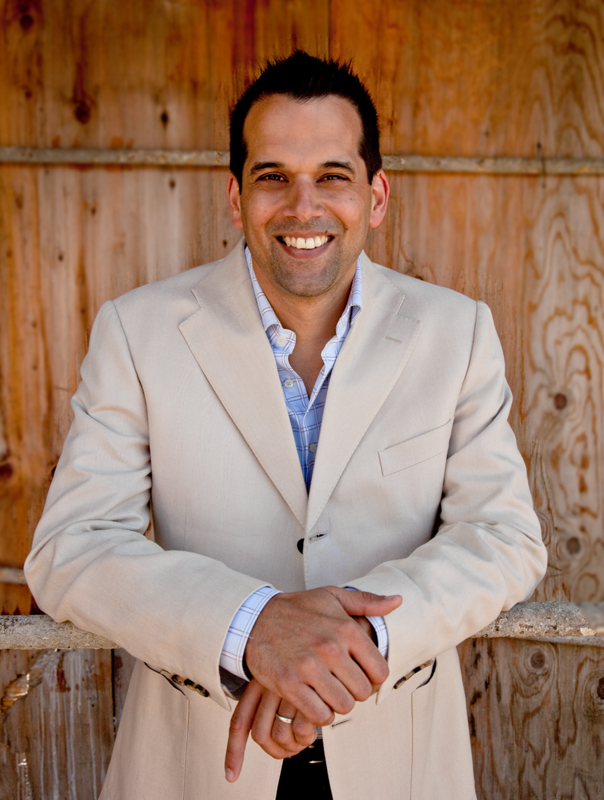
A look at the company, which helped Charlie Sheen open up his Twitter account, with Arnie Gullov-singh, AD.LY CEO.
Readers: what's your favorite Charlie Sheen 1-liner?
Sunday, March 06, 2011
BIA/Kelsey: Consumer Spending on Deal-a-Day Offers Likely to Reach $3.9B in U.S. by 2015
Analysts will highlight details from new forecast during a Daily Deals SuperForum at Interactive Local Media East, March 21-23 in Boston; LivingSocial CEO Tim O’Shaughnessy to keynote
CHANTILLY, Va. (March 3, 2011) - BIA/Kelsey, adviser to companies in the local media industry, released a new forecast today on U.S. consumer spending on deal-a-day offers, which the firm expects will grow from $873 million in 2010 to $3.9 billion in 2015, representing a 35.1 percent compound annual growth rate (CAGR). While this is the most likely growth case, BIA/Kelsey suggests a number of variables will have an impact on the actual development of deal a day, such as growth in the number of cities/sites, registered users, transactions per year for the average user and the average price per transaction. Considering these variables, deal a day could grow to as much as $6.1 billion by 2015 (47.4 percent CAGR), while a very conservative outlook pegs the space at $2.1 billion (19.7 percent CAGR).

“Deal a day has experienced incredible growth during its three-year incubation period beginning in 2008,” said Mark Fratrik, vice president, BIA/Kelsey. “We expect this to continue as companies in the space are rapidly adding markets and increasing total user count. They are also subdividing existing metros to provide deals closer to where users live, which we believe will help offset any drop-off that may occur due to consumer fatigue as the novelty of the form fades.”
Thursday, March 03, 2011

Gene Munster on iPad2 - Bloomberg

Gene Munster, an analyst at Piper Jaffray Cos., talks about Apple Inc.'s new version of the iPad and investor sentiment toward Chief Executive Officer Steve Jobs. Jobs emerged from medical leave to introduce the iPad 2 at a company event in San Francisco yesterday. Munster speaks with Betty Liu on Bloomberg Television's "In the Loop."
Wednesday, March 02, 2011
NPR: China Dependent On Tobacco In More Ways Than One
"As if on a pilgrimage trail, visitors to the city of Yuxi in southwest China pose for photographs beside eight cigarette-like pillars and then in front of a hilltop red pagoda, instantly recognizable to most Chinese from the cigarette packets of the Hongta — or Red Pagoda — group.
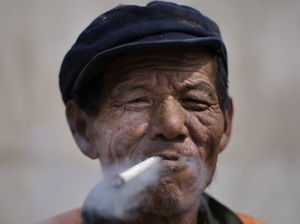
With 80 percent of Yuxi's revenue from tobacco taxes, this is the town that tobacco built. In particular, one cigarette brand, Hongta, now owned by the Hongyun group, is responsible for this town's wealth. Yuxi has a Hongta avenue, a Hongta hotel, a Hongta sports stadium — and even a tobacco culture museum devoted to extolling the pleasures of smoking.
Tobacco Dependence
On a national level, too, tobacco plays an important role, providing Beijing's biggest single source of tax revenue: Last year topped $75 billion. The Chinese government actually runs the world's biggest tobacco company and is intimately involved at every level of this deadly, murky industry — from marketing, sales and distribution down to production with widespread reports of village officials forcing farmers to grow tobacco against their will.
Given China's burgeoning ranks of smokers, the tobacco business has been hugely lucrative for Beijing, with annual profits up almost 20 percent every year for the past five years.
"The industry in China is run by the Tobacco Monopoly Administration, a central government administrative body created in the 1980s, also known as China Tobacco Corp.," says Stanford University's Matthew Kohrman, who has researched smoking in China for the past eight years. "This is one of the last bastions of the command economy system. Quotas are set; factories are required to meet them. Once they meet those quotas they are required to shut down."
The Hongta factory in Yuxi is one of the world's largest, with an annual production of 93 billion cigarettes. According to epidemiological studies, that's enough to kill 77,000 people every year.
'How Could This Be A Bad Influence?'
But despite the fatal nature of its products, most people in Yuxi support the factory, largely because the city is so dependent upon it.
EnlargeLouisa Lim/NPR
Bronze statues of tobacco farmers outside Yuxi's Tobacco Culture Museum. The exhibits don't include any warnings of the dangers of smoking.
"Of course the Hongta group's good. It's made Yuxi rich," says Mr. Zheng, an elderly visitor to the museum, who has brought his 5-year old grandson to examine the museum dedicated to smoking.
"How could this be a bad influence? It's just about tobacco production: planting, curing tobacco, all the way to cigarettes," he says.
The walls of the museum are decorated with photographs of China's leaders smoking, including Chairman Mao surrounded by a bevy of smiling beauties, vying to light his cigarette. Deng Xiaoping is shown puffing away and quoted as telling Japanese visitors: "I only smoke because I'm so healthy. I hear there are a lot of advantages to smoking."
There's a wall of fame for celebrity smokers like Winston Churchill, Fidel Castro and Vincent van Gogh. There are bronze statues of tobacco growing; there are star-shaped arrangements of cigarette filters; but there are no notices pointing out that smoking is bad for your health.
EnlargeMuhammed Muheisen/AP
An elderly Chinese construction worker smokes a cigarette while taking a break from work in Beijing.
China is failing to curb smoking, despite attempts by anti-smoking campaigners. China has a third of the world's smokers, with almost 60 percent of adult Chinese men smoking regularly. In January, Beijing marked its fifth anniversary since ratifying the international anti-smoking treaty, the Framework Convention for Tobacco Control, with an admission that it had managed to fulfill only 37 percent of its commitments.
The government just announced new moves limiting scenes showing smoking on television and in films, but campaigners say the real problem is structural. In what is itself a violation of the FCTC, the same government body that develops and manages the tobacco industry in China also oversees anti-tobacco efforts.
"The leadership of tobacco control should change," says Wang Ke'an, who works for the Think-Tank Research Center for Health Development. "The tobacco monopoly should not be involved. ... It's not so good because they give some interference when it comes to tobacco control."
Tobacco Farmers' Fate
On the ground, farmers also report interference, this time by village officials. Few willingly grow tobacco, since they say they can make three to five times more growing vegetables. Surveys bear this out, showing tobacco has the lowest revenue-to-cost ratio of all crops surveyed.
A 2005 investigation by a Chinese paper, the Economic Times, estimated the average income among tobacco farmers in Hongta district to be just a quarter of the average annual agricultural income, well below the poverty line. The most recent official government statistics claim that tobacco farmers earn on average $3,500 a year, but on the ground, farmers say their income is as little as a tenth that figure.
Some farmers do choose to grow tobacco, since there's a guaranteed buyer — the state — and other enticements, including subsidies in the form of free or cheap fertilizer. Tobacco farmer Huang Mei describes how it works in her village.
"The village committee holds a meeting. If you want to grow tobacco, then you tell village officials how much land you will use, and you get cheap fertilizer. They also teach you how to grow tobacco," she says. "Last year there was a drought, and the government gave us water. If we were growing vegetables, we wouldn't have had such treatment."
But there are widespread reports farmers are being forced to grow tobacco, miring them in poverty. According to a 2004 survey carried out by Berkeley professor Hu Teh-Wei and some Chinese professors, 93 percent of tobacco farmers indicated that they would not have grown tobacco if they had not been subject to government pressure. Many say the situation has improved since then. But one farmer who gives his name as Yang insists that in his village, most tobacco growers are forced into it.
"Local officials say they've received a notice from above, and every family has to grow some tobacco. Nobody does it willingly, since it does not make economic sense. We only receive half the subsidies; the rest is siphoned off by officials," he says.
Tax Addiction
Nobody knows how widespread this is, but several tobacco control campaigners have heard similar stories, and farmers interviewed by the Economic Times said their nontobacco crops had been uprooted by village officials. The State Tobacco Monopoly Administration turned down a request for an interview, as did the Hongta group itself.
One thing, however, is clear: Such coercion could be explained by China's addiction to tobacco tax revenues, at all levels of the government.
"A few years back, most of China's rural agricultural taxes were ended. One of the few exemptions, though, is the tobacco tax," says Stanford's Kohrman. "County officials are keen to see tobacco grown, because it's the only way that they — in terms of agricultural production — can finance themselves."
That system seems unlikely to change. Here's one other reason why: the deputy director of the State Tobacco Monopoly is Li Keming; he's the brother of the man tipped to be China's next premier, Li Keqiang.
Smoking may be costing 1 million Chinese lives a year, but the anti-smoking lobby fears the tobacco industry's high-level political patronage means reform is unlikely to happen anytime soon.
Gates Foundation: 2010 Annual Letter from Bill Gates
"This is my second annual letter. The focus of this year’s letter is innovation and how it can make the difference between a bleak future and a bright one.
2009 was the first year my full-time work was as co-chair of the foundation, along with Melinda and my dad. It’s been an incredible year and I enjoyed having lots of time to meet with the innovators working on some of the world’s most important problems. I got to go out and talk with people making progress in the field, ranging from teachers in North Carolina to health workers fighting polio in India to dairy farmers in Kenya. Seeing the work firsthand reminds me of how urgent the needs are as well as how challenging it is to get all the right pieces to come together. I love my new job and feel lucky to get to focus my time on these problems.
The global recession hit hard in 2009 and is a huge setback. The neediest suffer the most in a downturn. 2009 started with no one knowing how long the financial crisis would last and how damaging its effects would be. Looking back now, we can say that the market hit a bottom in March and that in the second half of the year the economy stopped shrinking and started to grow again. I talked to Warren Buffett, our co-trustee, more than ever this year to try to understand what was going on in the economy.
Although the acute financial crisis is over, the economy is still weak, and the world will spend a lot of years undoing the damage, which includes lingering unemployment and huge government deficits and debts at record levels. Later in the letter I’ll talk more about the effects of these deficits on governments’ foreign aid budgets. Despite the tough economy, I am still very optimistic about the progress we can make in the years ahead. A combination of scientific innovations and great leaders who are working on behalf of the world’s poorest people will continue to improve the human condition.
One particular highlight from the year came last summer, when I traveled to India to learn about innovative programs they have recently added to their health system. The health statistics from northern India are terrible—nearly 10 percent of children there die before the age of 5. In response, the Indian government is committed to increasing its focus and spending on health. On the trip I got to talk to Nitish Kumar, the chief minister of Bihar, one of the poorest states in India, and hear about some great work he is doing to improve vaccination rates. I also got to meet with Rahul Gandhi, who is part of a new generation of political leaders focused on making sure these investments are well spent. The foundation is considering funding measurement systems to help improve these programs. Rahul was very frank in saying that right now a lot of the money is not getting to the intended recipients and that it won’t be easy to fix. His openness was refreshing, since many politicians won’t say anything that might discourage a donor from giving more. He explained how organizing local groups, primarily of women, and making sure they watch over the spending is one tactic he has seen make a big difference. The long-term commitment to measuring results and improving the delivery systems that I heard from him and other young politicians assured me that health in India will improve substantially in the decade ahead. "
Read more: http://www.gatesfoundation.org/annual-letter/2010/Pages/bill-gates-annual-letter.aspx

2009 was the first year my full-time work was as co-chair of the foundation, along with Melinda and my dad. It’s been an incredible year and I enjoyed having lots of time to meet with the innovators working on some of the world’s most important problems. I got to go out and talk with people making progress in the field, ranging from teachers in North Carolina to health workers fighting polio in India to dairy farmers in Kenya. Seeing the work firsthand reminds me of how urgent the needs are as well as how challenging it is to get all the right pieces to come together. I love my new job and feel lucky to get to focus my time on these problems.
The global recession hit hard in 2009 and is a huge setback. The neediest suffer the most in a downturn. 2009 started with no one knowing how long the financial crisis would last and how damaging its effects would be. Looking back now, we can say that the market hit a bottom in March and that in the second half of the year the economy stopped shrinking and started to grow again. I talked to Warren Buffett, our co-trustee, more than ever this year to try to understand what was going on in the economy.
Although the acute financial crisis is over, the economy is still weak, and the world will spend a lot of years undoing the damage, which includes lingering unemployment and huge government deficits and debts at record levels. Later in the letter I’ll talk more about the effects of these deficits on governments’ foreign aid budgets. Despite the tough economy, I am still very optimistic about the progress we can make in the years ahead. A combination of scientific innovations and great leaders who are working on behalf of the world’s poorest people will continue to improve the human condition.
One particular highlight from the year came last summer, when I traveled to India to learn about innovative programs they have recently added to their health system. The health statistics from northern India are terrible—nearly 10 percent of children there die before the age of 5. In response, the Indian government is committed to increasing its focus and spending on health. On the trip I got to talk to Nitish Kumar, the chief minister of Bihar, one of the poorest states in India, and hear about some great work he is doing to improve vaccination rates. I also got to meet with Rahul Gandhi, who is part of a new generation of political leaders focused on making sure these investments are well spent. The foundation is considering funding measurement systems to help improve these programs. Rahul was very frank in saying that right now a lot of the money is not getting to the intended recipients and that it won’t be easy to fix. His openness was refreshing, since many politicians won’t say anything that might discourage a donor from giving more. He explained how organizing local groups, primarily of women, and making sure they watch over the spending is one tactic he has seen make a big difference. The long-term commitment to measuring results and improving the delivery systems that I heard from him and other young politicians assured me that health in India will improve substantially in the decade ahead. "
Read more: http://www.gatesfoundation.org/annual-letter/2010/Pages/bill-gates-annual-letter.aspx
Recent Greylock Partners Investments
| |
| |
| |
| |
| |
| |
| |
| |
|


Subscribe to:
Posts (Atom)