Tuesday, March 31, 2009

fortune: Microsoft Reality Ad - More on "Lauren" - De Long not Conrad

“I’m just not cool enough to be a Mac person.”

All about Microsoft’s “Lauren”
Her hair is red, her eyes dark brown, her physique slim. She stands 5′2″ in her stocking feet and weighs 113 lbs. in her birthday suit.
Her name is Lauren De Long, and she set a million geek hearts aflutter with her spunky performance in the now famous “you find it, you keep it” PC ad, in which she chose an HP (HPQ) Pavillion running Microsoft (MSFT) Windows Vista Home Edition over any computer in the Apple (AAPL) store.

She’s the young, hip, Volkswagen-driving redhead who stars in the latest Microsoft’s (MSFT) TV campaign. Told that if she can find a 17-inch laptop for under $1,000 she can keep it, Lauren ends up — to the Mac aficionados’ dismay — with an HP (HPQ) running Windows Vista.
“I would have to double my budget, which isn’t feasible,” Lauren says as she drives away from an Apple Store, where 17-inch notebooks start at $2,799. Then she sighs and delivers the ad’s coup de grace: “I’m just not cool enough to be a Mac person.”

wsj: PS2 now at $99. Analysts expecting $100 drop in PS3


Sony is cutting the price of its PS2 by 23% to $99.99 as it tries to keep the momentum going for the older videogame console, which has been selling well despite the introduction of the PlayStation 3 in 2006.
Analysts expect the company to cut prices on that console as well later this year. They expect prices to be lowered by about $100.
Videogame publishers have continued to make new games for the PS2. Sony expects 70 to 80 new titles for the PS2 to come out this year, with another 70 to 80 titles released in 2010.

Google Announces Venture Fund - $100MM


Google announces venture fund - expected to invest $100 million in the next tweleve months. Google Ventures will be part of Corporate Development led by David Drummond, SVP, Corporate Development and Chief Legal Officer.
Google Ventures has already invested in Silver Spring Networks, which provides technology to help manage electric grids and Pixazza, which links online images with related products that can be purchased.
Email all your great ideas to ventures@google.com
Partners:
Bill Maris is a Managing Partner of Google Ventures. Bill brings more than a decade of diverse operational, entrepreneurial and leadership experience to Google Ventures. Bill's past successes include founding Web hosting pioneer Burlee.com, which he subsequently sold to Interland, Inc. (NASDAQ: WWWW), now known as Web.com. Prior to that, Bill was a portfolio manager for Stockholm, Sweden-based Investor AB, one of the world's largest industrial holding companies, where he co-managed the biotechnology and health care portfolios. Bill’s background also includes scientific research into cholinergic visual pathways, cell membrane patch clamping techniques and in-vivo neuronal cell injection at Duke University Medical Center, Department of Neurobiology. Bill is based in Mountain View, CA and received an A.B. with honors in Neuroscience from Middlebury College.
Rich Miner is a Managing Partner of Google Ventures. He has spent the past 25 years growing businesses with innovative communications and interface-intensive applications. Rich joined Google through the acquisition of Android, a mobile platforms company.
http://www.google.com/ventures/index.html

Monday, March 30, 2009

Xconomy: Cancer drug developer BioVex raises $40M


"BioVex, a cancer drug developer based in Woburn, MA, reported some impressive clinical trial results that we covered last June. Now the company has raised $40 million in venture capital to see if it’s good enough to bring this drug candidate to the marketplace.
The investment round was led by Amsterdam-based Forbion Capital Partners, which was joined by existing investors that include Credit Agricole Private Equity, Innoven Partners, New Science Ventures, Triathlon Medical Venture Partners, and Scottish Equity Partners.
This group of investors are wagering on a concept that has intrigued cancer researchers for years—oncolytic viruses. These are viruses that are genetically modified to replicate inside tumors, provoking the immune system to mount an attack in the cancerous growth itself, while sparing healthy tissue. The BioVex treatment, OncoVex GM-CSF, takes one of these viruses and attaches it to copies of GM-CSF, an immune-boosting drug. The combination is supposed to help the immune system hunt down all sorts of cancer cells that have spread throughout the body.
Results from a study of 50 patients with metastatic melanoma—a deadly form of skin cancer that has metastasized widely in the body—showed that this technique was able to completely wipe out tumors for eight patients, and partially shrink tumors for another five patients. Eleven of the people who responded to therapy remained stable for more than six months, the company said. Side effects of the drug were consistent with other treatments of its kind-mild fever, chills, and fatigue, said Neil Senzer of Mary Crowley Cancer Research Center in Dallas, in an interview last June. Researchers saw no evidence that the treatment created a dangerous overreaction of the immune system, he said."

Sunday, March 29, 2009

Yhoo: Skype announces service for iPhone, BlackBerry


Skype, the Internet telephone unit of eBay Inc, is planning to launch its service for iPhone users on Tuesday and for BlackBerry in May as part of its effort to expand beyond desktop computers.
Skype has been pushing to make its service work on the most popular advanced phones with an aim to expending its more than 400 million users who were mostly lured by the promise of cheap and sometimes free calls made using its computer application.
"The No. 1 request we get from customers is to make Skype available on iPhone. There's a pent-up demand," Durchslag said in an interview before the CTIA annual mobile showcase in Las Vegas, where Skype plans to launch the service on Tuesday.

CCS Insight analyst Ben Wood said the new applications give Skype a chance to boost its mobile phone position, which has been weaker than that of social sites such as Facebook, Twitter or News Corp's MySpace.
One of Skype's unusual iPhone features is the fact that it allows subscribers use to the phone numbers in their existing iPhone address book so they do not need duplicate lists.
"Whether you're Twitter, MySpace or Facebook you want to be embedded in the address book," said Wood. "This puts Skype firmly into the game."
Skype's iPhone application will be free to download and will allow free calls between Skype users. As with Skype on the desktop, fees will be charged for calls to traditional phones.
The service will also work on later versions of Apple's latest iPod Touch device, which has Wi-Fi links but no cellular connection. The iPod Touch launched September 2008 has a microphone, unlike the first iPod Touch launched in 2007.

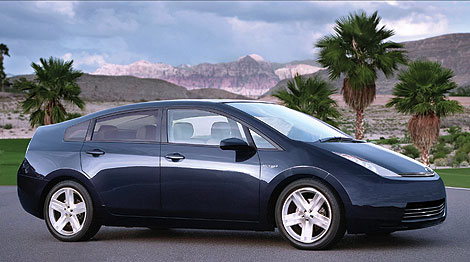
NYT: 2010 Prius , 12MM sold worldwide, 8 of 10 owners said they'd rebuy


NYT: 2010 Prius , 12MM sold worldwide, 8 or 10 owners said they'd rebuy
Toyota says the new car completed the government‘s test cycle with an economy rating of 51 m.p.g. in city driving and 48 m.p.g. on the highway. Combined mileage came out at an industry-leading 50 m.p.g. In much of the nation these days, you can fill the Prius’s 11.9-gallon tank for less than $20.
Not only did the Prius help to prove that hybrid gas-electric powertrains can be feasible, reliable and desirable, the car has become the object of cultlike affection and a social statement. In the decade since the first Prius was introduced in the United States, more than 1.2 million have been sold worldwide. According to Toyota, 8 out of 10 Prius owners say they would buy another.
In keeping with its plans to increase hybrid sales to one million a year in the next few years (from 241,405 in 2008), Toyota is introducing a third-generation Prius in May. Will the new version of this iconic vehicle sustain the respect of its admirers? Will making the 2010 Prius slightly bigger and slightly faster add to the appeal, or will the upsizing backfire?

Saturday, March 28, 2009

NYT: A look at the world's cheapest car - $2k USD Tato Nano in India


NYT: A look at the world's cheapest car - Tato Nano in India
The Nano has been nicknamed “The People’s Car” because its starting price will make it accessible to more Indians than any other new car on the market. But the ultra-cheap, ultra-compact Nano comes with no frills. It runs on a 623-cc 2-cylinder engine with about 30 horsepower. Power steering and power brakes are optional on the base model. Airbags, antilock brakes and even a radio aren’t available at all.
The official launch of the tiny four-door car, however, was hardly lacking in pomp and ceremony. And perhaps lost amid the canapés and five-star service of the Taj Hotel (which is owned by the Tata Group and was a target of last year’s terrorist attacks) was the fact that, despite appearances, the Nano isn’t exactly on sale yet.
The first models arrive in dealer showrooms in early April. Application forms to register to buy the car will be accepted from April 9-25. And for the first time in company history, Tata Motors will charge a fee (about $6) to anyone who applies to buy the car.

Friday, March 27, 2009

Yahoo: Tesla unveils latest - electric sedan "Model S" - $50k after $7.5k tax credit


Tesla unveils groundbreaking electric car
- 300 mile range
- 45 minute QuickCharge
- 0-60 mph in 5.6 seconds
- Seats 7 people
- More Cargo space than station wagons
- 2X as efficient as hybrids
- 17 inch infotainment touchscreen
US automaker Tesla Motors unveiled its state-of-the-art five-seat sedan here Thursday, billed as the world's first mass-produced, highway-capable electric car.
Tesla chief executive Elon Musk said the company, which last year released a breakthrough two-seater roadster, aims to have its sleek "Model S" sedan rolling off assembly lines by 2011.
The futuristic zero-emission vehicle will be powered by lithium-ion battery packs capable of between 160 and 300 miles (257 and 482 kilometers) per charge.
The car has an anticipated base price of 57,400 dollars but will cost less than 50,000 after a federal tax credit of 7,500 dollars, Musk said.
While the price tag is steep compared to other mass-market sedans, Tesla has stressed that tax incentives, relatively inexpensive maintenance and refueling will make the car competitive with cheaper rival sedans.
Musk told reporters that he hoped the car would lead a new generation of vehicles which would help the auto industry wean itself off of foreign oil.
"What we really wanted to show the car industry is that it is possible to create a compelling electric car at a compelling price," Musk said. "We hope the industry will follow our lead."
"It's incredibly important that we wean ourselves off oil as soon as possible and that we make the transition to electric vehicles rapidly."
Musk said Tesla aimed to manufacture around 20,000 units per year from an undisclosed factory location in Southern California and said the vehicle could be charged at home in just four hours.
"Even at 20,000 cars per year we won't come close to affecting the electricity grid and you will be able to charge this car at home.
"It's capable of taking a wide range of currents and voltages, and the charge is built into the car so you don't have to worry about 'Is there a charger at the destination that I'm driving to?'," Musk said.
Tesla said its new model would become the "car of choice for environmentally conscious and discriminating drivers throughout North America and Europe." It expects to roughly split initial sales between the two continents before expanding into Asia in 2012.
Tesla's other zero-emission car, the two-seat Roadster, is on sale in Europe and the United States.
The company said last year it had ramped up production of the high-performance vehicle, with a price tag of about 100,000 dollars, due to soaring demand.
Tesla, founded in 2003, specializes in the environmentally-friendly, electric cars that several car manufacturers are starting to produce.
Thursday's unveiling comes against the backdrop of a US auto industry in crisis while President Barack Obama has said his administration wants to see a million electric cars on the roads by 2015.
Auto industry analysts were cautious about whether Tesla's "Model S" suggested that the future of the US auto industry was electric, saying hybrid vehicles and low fuel prices could stymie their growth.
Jim Hossack of California-based AutoPacific Consulting said Tesla's latest prototype was "something of a technical marvel" but questioned whether it could revolutionize the US auto industry.
"The problem is our fuel price. If you're going to launch an electric vehicle you probably want to do it in a market where fuel prices are high," Hossack told AFP. "At the moment in the US, they're cheap, a quarter of what they are in Europe or Japan. Hybrids might be better positioned to be the dominant technology."
While production of the "Model S" would demonstrate that it was possible to make a mass-produced electric car, Hossack noted that "we can also put a man on the moon. And it turns out it's expensive."
"A 50-60,000 dollar four-door sedan is not going to to turn the world on its head," he said.

East Bay Express: Yelp / Extortion Part 2


Part 2 - From East Bay Express
Yelp Extortion Allegations Stack Up
More business owners come forward with tales of unethical behavior by the popular San Francisco-based web site.
By Kathleen Richards - March 18, 2009
After my story "Yelp and the Business of Extortion 2.0" was published last month, Yelp CEO Jeremy Stoppelman promptly launched into damage-control mode — and for good reason. The story, which was picked up by national news outlets including The New York Times and The Wall Street Journal, detailed the accounts of local business owners who said that sales reps at the popular user-generated review site offered to move negative reviews of their businesses if they advertised. Stoppelman immediately denied the allegations on Yelp's official blog, criticizing my use of anonymous sources and the credibility of one on-the-record source. A few days later, he posted another response, optimistically titled "East Bay Express Story Starts to Unravel." But the reality was just the opposite.
Since then, many business owners from around the country have come forward — via e-mails or comments on the Express' web site — alleging similar tales of extortionist tactics by Yelp sales reps. To make matters worse, Stoppelman's handling of the allegations exposed the company's blaring hypocrisy. For example, he rebutted the story on Yelp's blog, which, ironically, doesn't allow comments. Business owners contend that they just want the same opportunity to respond to negative, false, or damaging information about their businesses. Instead, the only way for them to salvage their businesses' reputation is by paying Yelp — regardless of whether the reviews are true or false.
Secondly, Stoppelman criticized my use of anonymous sources, calling it "fraught with hazards and ... strongly discouraged by most editors." Yet Yelp is a review site based entirely on anonymous sources. Stoppelman claims Yelp's reviews are reasonably trustworthy because of the web site's review filter, and because reviews may be suppressed if they're not written by frequent Yelpers. However, only the first name and last initial of the reviewer is posted, in some cases just initials, and in some cases fake names with no photos. Frequently posting anonymously does not make one any less anonymous.
Because Stoppelman's chief criticism of my article was that many of my sources were anonymous, for this follow-up I decided only to interview people who were willing to go on the record. Their stories are no less damaging: several said that the reps would offer to move negative reviews if they advertised; and in some cases positive reviews disappeared when they refused, or negative ones appeared. In one case, a nightclub owner said Yelp offered positive reviews of his business in exchange for free drinks.

Barry Hyde, owner of M&M Auto Werkes in Campbell (eleven reviews, 3.5 star rating), said that about a year ago, Yelp sales rep Jacqueline Fitzhugh called him to let him know that his business had a lot of positive reviews on Yelp. "You can accentuate that with advertising," he recalled Fitzhugh telling him. Hyde declined, saying that he didn't want to spend the money. This scenario, he says, went on for a few months.
Then, Hyde said he received a negative review from a legitimate customer. He tried to rectify the situation with her, but to no avail. Seven months later, Hyde said the customer's boyfriend posted a negative review based on his girlfriend's experience. "I have an issue with that," said Hyde, noting that third parties aren't allowed to post reviews as outlined by Yelp's Terms of Service. When he complained to Fitzhugh, he said she replied, "'We can't control that, but if you advertise you can control the order that they're in.' So I could move those negative ones down to the bottom of my listing."
Fitzhugh's response unsettled Hyde. So he said he contacted Stoppelman and told him, "What you're doing is unethical" because Yelp doesn't allow business owners to post their responses to negative reviews. "We stopped talking for a while," Hyde said. "Then I notice some of my five-star posts are disappearing. They said we have a spam filter like Google." Hyde tracked his reviews, printing them daily to monitor which ones would disappear. Some stayed up for as short as 31 days and as long as 131 days — all were five-star reviews, he said. Hyde said that Yelp told him that if he advertised, some of those five-star reviews would come back. But that wouldn't make sense if they were truly being suppressed because of Yelp's anti-spam algorithm. "If these are bad people as you stated, why would I want them to come back?" he wondered. Hyde says he agreed to finally advertise with Yelp, but was then told his business wasn't eligible for reasons they wouldn't disclose.
Calvin Gee of Haight Street Dental in San Francisco (twenty reviews, 3.5-star rating) said he had five five-star reviews on Yelp when sales reps contacted him starting around the end of 2007. "They were kind of aggressive," Gee recalled. "I said no a couple times. After I said no a bunch of times ... then I got negative reviews. ... All of a sudden it dropped to 3.5 stars." Gee said one of the negative reviews was clearly written by a former employee he had fired. He alerted his sales rep, who then removed it. "They say they have an algorithm — that's total bullshit," he said.
According to Gee, Yelp sales reps told him that if he advertised, "they would remove the sponsored search of other dental offices on my page, and then they would let me choose my favorite review, and then they would move the negative reviews to the bottom of the page," he said, noting that the last two options were distinctly different. "And then they definitely said when I talked to them about the negative reviews, they said they would remove that — which they did."
Exploring the issue further, Gee noticed that one of his competitors and an advertiser with Yelp, CitiDent, had two separate business listings on Yelp. In what Gee believes is proof that Yelp kowtows to its advertisers, the business had more positive reviews and a higher star rating on the page that was marked as a Yelp sponsor, and more negative (though different) reviews and a lower star rating on the page that was not marked. Gee printed up both pages, dated August 2008, which he shared with this newspaper. Today, CitiDent is no longer a Yelp advertiser and only has one page, on which both the positive and negative reviews from the two listings are combined.
Larry Trujillo, co-owner of the Uptown Nightclub in Oakland (78 reviews, four-star average), said that shortly after he opened the club in November 2007, a Yelp salesperson harassed him almost daily about advertising. "He would call up and the first thing he would say is, 'I notice you have a lot of positive reviews,'" Trujillo recalled. "'We could make sure that those reviews stay positive.'"
One of the ways Trujillo could accentuate his positive reviews, apparently, was by giving Yelpers free drinks. Separate from the ad pitch, Trujillo said Yelp executives contacted him about throwing a party at the venue.
He recalled the scenario in an e-mail: "After numerous tours of the Uptown and rounds of free drinks given to the so-called brass of the Bay Area 'Yelpers' who were offering to throw a Yelp party at the Uptown, when I was finally contacted by a Sarah Lippman, I learned their real motive. ... After several phone meetings, she finally came to the point and pitched me on what she really wanted: free use of the club with staff and alcohol expenses covered by the Uptown in exchange for positive reviews."
Trujillo likened her pitch to extortion, and then told her she could rent the Uptown and he'd risk bad reviews. "Well that's not how we do things," he said she had responded. "We never pay for stuff like this and other businesses have responded positively to these types of offers." Trujillo said he expressed his skepticism of whether his business' positive reviews were "posted merely to warm us up for your pitch" and ended the discussion: "Thanks but no thanks."

Debbie Leonardo, director of membership at Ruby Hill Golf Club in Pleasanton (ten reviews, 4.5 star rating), said she received a sales call from Yelp about a year ago. The saleswoman, whose name Leonardo could not recall, explained what Leonardo could control if she bought an ad, such as her business' photos, and that no competitor's ad would show up on their page. "And that's when she told us we could get rid of our worst review," Leonardo said. "The other people have said 'bury' — she said we could remove our worst review. She was the only one. Everyone else indicated that we could bury them, move them around." Leonardo declined the offer.
Bob Kurtz, owner of adult and collectibles store Collector's Realm 3 in Oakland (four reviews, four-star average), said that Yelp sales reps contacted him about advertising after he received a negative review. "We asked about our very negative review and we were told that as paid advertisers that review would be dealt with," he recalled in an e-mail. "While not said, there was the implication in my mind that the review would be buried in some manner or perhaps even removed." Kurtz said he wrote a negative review about Yelp on Yelp, but that it was suppressed. "Clearly they are hypocrites," he said.

Nicholas Paul, an instructor at an art studio in Chicago (which did not want to be named for fear of retribution) and who handles the studio's advertising, said that Yelp approached him to advertise starting in July of 2008. After he turned them down, "then all of a sudden three of our positives disappeared and then we got two negative ones," he said. Of the original thirteen reviews they had, only eight now remain, four of which are negative. Paul says the sales rep told him he could control that. "We could basically adjust the way our reviews are read," Paul said the rep told him. "We could highlight the ones we wanted and put the ones we didn't want on the backburner."
If the Express was to follow Yelp's model, we would ensure that positive information about Yelp will appear higher up in our next story — if they advertise.

EB Express: Yelp and the Business of Extortion / Part 1 or 2


From East Bay Express February 18, 2009 - Part 1 of 2
Local business owners say Yelp offers to hide negative customer reviews of their businesses on its web site ... for a price.
Many feel threatened by Yelp's power to harm their business.
The phone calls came almost daily. It started to get creepy.
"Hi, this is Mike from Yelp," the voice would say. "You've had three hundred visitors to your site this month. You've had a really good response. But you have a few bad ones at the top. I could do something about those."
This wasn't your average sales pitch. At least, not the kind that John, an East Bay restaurateur, was used to. He was familiar with Yelp.com, the popular San Francisco-based web site in which any person can write a review about nearly any business. John's restaurant has more than one hundred reviews, and averages a healthy 3.5-star rating. But when John asked Mike what he could do about his bad reviews, he recalls the sales rep responding: "We can move them. Well, for $299 a month." John couldn't believe what the guy was offering. It seemed wrong.
In fact, something seemed shady about the state of his restaurant's negative reviews. "When you do get a call from Yelp, and you go to the site, it looks like they have been moved," John said. "You don't know if they happen to be at the top legitimately or if the rep moved them to the top. You don't even know if this is someone who legitimately doesn't like your restaurant. ... Almost all the time when they call you, the bad ones will be at the top."
Usually, John said, he would politely decline to advertise. "Well, thanks," he'd say. "I'll talk to my partner about it." Or, "It's not really in my budget right now." But inevitably, in another week or so, he'd get another phone call. Occasionally, the voice on the other end of the phone would change, but the calls continued. These days, John chooses to not answer his phone when it's from a number with a 415 area code.
John may sound paranoid, but he's got company. During interviews with dozens of business owners over a span of several months, six people told this newspaper that Yelp sales representatives promised to move or remove negative reviews if their business would advertise. In another six instances, positive reviews disappeared — or negative ones appeared — after owners declined to advertise.
Because they were often asked to advertise soon after receiving negative reviews, many of these business owners believe Yelp employees use such reviews as sales leads. Several, including John, even suspect Yelp employees of writing them. Indeed, Yelp does pay some employees to write reviews of businesses that are solicited for advertising. And in at least one documented instance, a business owner who refused to advertise subsequently received a negative review from a Yelp employee.
Many business owners, like John, feel so threatened by Yelp's power to harm their business that they declined to be interviewed unless their identities were concealed. (John is not the restaurant owner's real name.) Several business owners likened Yelp to the Mafia, and one said she feared its retaliation. "Every time I had a sales person call me and I said, 'Sorry, it doesn't make sense for me to do this,' ... then all of a sudden reviews start disappearing." To these mom-and-pop business owners, Yelp's sales tactics are coercive, unethical, and, possibly, illegal.
"That's the biggest scam in the Bay Area," John said. "It totally felt like a blackmail deal. I think they're doing anything to make a sale."
Yelp officials deny that they move negative reviews, although such allegations have surfaced many times before. The issue is even addressed on the web site's Frequently Asked Questions page. Chief Operating Officer Geoff Donaker said advertisers and sales representatives don't have the ability to move or remove negative reviews. "We wouldn't be in business very long if we started duping customers," he said.
But Donaker's denials are challenged by nine local business owners and also by a former contract employee who worked with Yelp in its early days. That person, who is still close to some Yelp employees and only agreed to be interviewed if granted anonymity, said several sales reps have told him they promised to move reviews to get businesses to advertise. "It's not illegal or unethical," he said they told him. "We're just helping the little guy. It doesn't hurt them, it benefits them."
Such tactics may be legal, but they clearly raise ethical concerns. Yelp touts its web site as consisting of "real people" writing "real reviews." The allegations of business owners who have tangled with the company suggest otherwise.
If Yelp indeed suppresses honest reviews in exchange for its advertisers' money, it is cheating users who expect genuine consumer feedback. Conversely, if Yelp demands payment to remove even dishonest reviews, then advertisers are being cheated.
One thing is certain: In both cases, Yelp benefits.
Yelp.com was founded in July 2004 by two young entrepreneurs: Jeremy Stoppelman, 31, and Russel Simmons, 30, who had worked together at PayPal. They conceived the idea during an "incubator" held by PayPal cofounder Max Levchin. The concept was an online city guide with a Web 2.0 mentality, allowing "real people" to write "real reviews" about nearly any type of business — from restaurants to dentists, bars to clothing stores.
Yelp creates a page for individual businesses, including address and phone number, like a directory. Then, any person who signs up for a free Yelp account can write a review of the business and rate it on a five-star system.
The site's social-networking capabilities and clever marketing quickly made it popular with young, web-savvy users accustomed to using the Internet to find their goods and services. Launched in the Bay Area, the site has since spread to many major metropolitan areas — including Los Angeles, Chicago, New York, Boston, Las Vegas, and Seattle — as well as England and Canada.
Today, Yelp draws more than 16 million unique visitors to the site each month, according to Yelp spokeswoman Stephanie Ichinose. More than 4.5 million reviews have been written so far, and the company has raised $31 million in funding to date.
Translating that traffic into a viable business model hasn't been easy. According to the Financial Times, the company still isn't making a profit. Yelp relies solely on advertising for revenue: banner ads from national businesses like Monster.com and Toyota, and fees from local businesses, which pay between $300 and $1,000 per month to highlight themselves in search results and enhance their page with photo slideshows and other information.

But while the basic premise of Yelp hasn't changed since its inception, its spirit has changed for the worse, according to "Mark," the former contract employee. "I started with them at the beginning, helping them market and put the word out for the company, and I loved the concept of this," he said, sitting in a Berkeley cafe in December. "I thought the whole thing would be positive and will increase business to a lot of the small businesses, the mom-and-pops."
But Mark complained that in the past two years there has been an increase in negative, trash-talking reviews. "If you don't like somebody for no reason, you can go on there and talk horrible about their place for whatever reason and also encourage close friends to go on there and trash those places." Mark cited a recent case with his own cafe in which a customer who was angry that the business was closed for a private event went on Yelp and accused employees of being unsanitary.
Other business owners describe similar experiences — receiving negative reviews from competitors or customers who are unreasonably angry. John said one of his employees told him that her former employer — a rival restaurateur — had gone on Yelp and written a negative review of his business. "How many other people have done that?" he wondered in an interview. "It's hard to know what's real."
Yelp's web site states that slamming a competitor is grounds for removing a review. But business owners say the company's response to such complaints is woefully inadequate. "We don't get anywhere," Mark said. "We're just one little restaurant in the middle of 500,000 restaurants that they review, or more than that. They don't have time to respond."
Last April, in response to a litany of complaints, Yelp began allowing business owners to sign up for a free "business owner account." It enables them to track how many people view their page, update their business' information, and send messages directly to a reviewer (although reviewers can choose to disable this feature).
Still, it's up to business owners and not Yelp to resolve disputed reviews. In a November e-mail from a Yelp employee in response to a local business owner's inquiry about why a positive review was removed, the staffer wrote, "While we can't evaluate individual cases or re-instate specific reviews, we certainly appreciate your feedback and are continually striving to improve the user experience."
Given the economics of the Web, Mark believes Yelp has no interest in curbing illegitimate reviews. "They needed more people to go on the site; they needed to promote the site; so they can't stop it," he said. "They don't want to stop it and create any problems for themselves. So they just let it open and try to get as many people on as they can." Mark said he stopped working with the company after several years because he didn't agree with the direction it was headed in.
Here's what advertisers receive, according to an e-mailed sales pitch that a local business owner sent to this newspaper. They can highlight a favorite review to appear at the top of the page about their business. They also show up first in search results for similar businesses in their region (for example "coffee" near "Alameda, CA"). Ads for that business appear on the page of local competitors, while competitors' ads do not appear on their page. Owners can post photo slideshows, add a "personal message" about their business, and have the ability to update info on special offers and events. They also can find out how many users visit their web site, update their page, contact Yelpers who've reviewed their business, and have access to an account manager who will help "maximize" their experience with Yelp.
But aside from a single "sponsored review" at the top of the page, the order of all other reviews is based on a secret Yelp algorithm, spokeswoman Ichinose said. The order is mostly due to recency and reader votes for certain reviews as "useful," "funny," or "cool." But Ichinose said there are other factors, including how frequently reviewers contribute to the web site and "what kind" of review writer they are. "It's a number of different things we don't disclose," she said. "To be explicitly clear, the algorithm is an automated system. There's no human manipulation of that. ... If we were to start doing that, that would erode the trust we have with consumers."
Yelp officials strenuously deny that the company moves negative reviews for advertisers. So how to explain all the stories?
(CONT'D through link)

Thursday, March 26, 2009

outblush.com


On average women spend 8 years of their lives shopping according to UKMail.

Interesting women's shopping site with significant site traffic.

"Outblush is a blog for girls who love to shop. Our staff digs up the best clothes, home stuff, beauty items, and more."

Modesty in women's clothing is getting a boost from the current economy. When consumer spending was in overdrive, retailers could sell to the masses and ignore the more muted voices asking for, say, a decent supply of sleeved shirts or prom dresses that show more fabric than skin. Sites such as outblush.com are thriving.
Another interesting site and trend is online coupon site couponcabin.com

SA: Pequot Capital: Yet Another Hedge Fund Buying Gold


"This is the 4th Quarter 2008 edition of our ongoing hedge fund portfolio tracking series. Before reading this update, make sure you check out the Hedge Fund 13F filings preface.
Next up is Pequot Capital Management run by Art Samberg. Pequot was founded by Art in 1986 with $3 million in assets and peaked with $15 billion in assets around the tech bubble. Today, he manages over $4 billion. They have 150 employees and employ multiple strategies, including private equity and venture capital, as Art believes equity returns will decline over time. Art holds a S.B. from Massachusetts Institute of Technology, an M.S. from Stanford University, and he received his MBA from Columbia University. Pequot Capital Management was recently ranked 93rd in Alpha's hedge fund rankings. In terms of their 2008 performance, their main fund was -17.5% for 2008, while their health care fund finished -27.9% as noted in our post on hedge fund year-end performance. Recently, we had noted that they amended some 13G filings and made some portfolio changes to a few larger positions. You can also read Pequot's March Commentary here by Byron Wien.

The following were their long equity, note, and options holdings as of December 31st, 2008 as filed with the SEC. We have not detailed the changes to every single position in this update, but we have covered all the major moves. All holdings are common stock unless otherwise denoted."

Roubini Says Stocks Will Drop as Banks Go ‘Belly Up’


"“The stock market is a bit ahead of the real macroeconomic and financial news,” Roubini, a professor at NYU’s Stern School of Business and the chairman of consulting firm Roubini Global Economics, said in an interview with Bloomberg Television in London today. “We’ll have some major banks going belly up that will need to be taken over.”

The global equity rebound in March that sent the Standard & Poor’s 500 Index to its best monthly advance in 17 years is a “bear-market rally” and U.S. Treasury yields will “remain relatively low” as investors flock to the safest assets, Roubini said. Treasury Secretary Timothy Geithner’s new plan to remove toxic debt from financial companies won’t be enough for insolvent banks, he said."

Wednesday, March 25, 2009

BBC: 50 million Nintendo Wii 's sold


Over 50 million of Nintendo's Wii console have been sold since 2006. Only 28MM for Xbox 360 and 22MM for Sony PS3.
Global sales of Nintendo's Wii console have passed 50 million, the company's boss Satoru Iwata has said.
The Wii is now the fastest-selling games console in history, surpassing the PlayStation 2.
Mr Iwata also said that Nintendo's handheld DS console had shipped 100m units around the world.
"Almost no one expected them to reach the current level of mainstream acceptance. It's even beyond what we possibly hoped for," Mr Iwata said.
"The market has expanded as video games have been accepted by more consumers than ever before," the Nintendo president, told the Game Developers Conference in San Francisco.
"It's a cliche but it's not just the 18-year-old kid, it's the mom on the train, it's the high-school girl after she's done with her homework, everyone plays games. "
'Outside the box'
"The Wii and DS have made games more accessible," Tameka Kee of PaidContent.org told BBC News
Jay Lauffer from Blizzard Entertainment was impressed by the figures and put it down to Nintendo's approach.
"I imagine its successful because Nintendo seems to be shifting what is kind of a traditional sit-down environment to getting people up and moving."
Remy Lavoie, a programmer with DTI Software said: "If Nintendo has such a big share of the market it's pretty impressive.
"They are thinking outside the box and its clearly paying off."
To create some excitement among developers, Mr Iwata unveiled some upgrades for the Wii which included a much-hoped-for new storage system.
It lets users store and launch WiiWare and virtual console games from high capacity SD cards. It is available for download now.
"Your games will no longer be competing on space for system memory," said Nintendo's Bill Trinen during a demonstration.
New titles
Rock 'N' Roll Climber, a new mountain-climbing game that uses the Wii Fit's Balance Board was also demonstrated to the audience. The player's character rocks out on a guitar when he reaches the top.
To date sales of the board have hit 14 million units with pre-orders on Amazon for the new DSi ahead of its launch next month reaching record levels said Mr Iwata.
Some new titles were announced for the Virtual Console including Final Fantasy Crystal Chronicles: My Life as a Darklord and Final Fantasy IV: The After Years for later in 2009.
Another addition is the Virtual Console Arcade which is available today with classic games like Space Harrier, Gaplus, Star Force, Solvalou, The Tower of Druaga, and Mappy.
For the DS, clips of a new upcoming Legends of Zelda: Spirit Tracks were greeted with applause.
But none of it convinced Robert Sindt, an associate professor at Johnson Community College in Missouri, that the Wii or the DS is the developers' dream.
"I think they are great platforms but I guess I am a tad sceptical what will become of it. I'm not sure developers will embrace it. Sony is pretty impressive and a better platform."
Software sells hardware
While Mr Iwata highlighted the success of the Wii and DS, he noted Nintendo did not achieve this on its own and thanked partners, press and consumers for their support.
He said that the major reason that the company is where it is is because "one rule always remains the same: Software sells hardware".
For developers who remain unsure about developing for either device, Mr Iwata said more third-party games were sold on these platforms last year than on any other platform.
Throughout his speech he continued to dazzle the audience with statistics and stressed that in the US, some 20% of owners had never owned a console before buying the Wii. He also noted that 47% of DS sales were made by women.
While Mr Iwata ended by acknowledging hard economic times, he also stressed that they tend to lead to real innovation.
"The great depression in the 1930s resulted in the jet engine, TV and chocolate chip cookies.
"As developers I believe anything is possible. The future of video games is in your hands and I can't wait for you to show us your surprises," Mr Iwata concluded.

SAI: AdMob's iPhone Ad Business Exploding (AAPL)


"Mobile ad network AdMob has moved aggressively into the iPhone ad market, and it's paying off. In the last year, the company's iPhone ad business -- measured by ad requests -- grew more than 35x.
Last month, the company served up 1.2 billion ads worldwide to Apple (AAPL) iPhone and iPod touch devices, or about 18% of its 6.56 billion total ad requests. In Feb. 2008, it served up about 33 million ads to iPhones, or about 1.3% of its 2.56 billion total ad requests."

Barrons: Trades betting on BX


""AH," THE OPTIONS TRADER said as he surveyed the market before it opened. "I love the smell of greed in the morning. Smells like … a normal market."
Perhaps Stephen Schwartzman, chief executive of Blackstone Group (BX), a private-equity firm, agrees. Even if he doesn't, the options market does, which suggest shares of this somewhat battered private-equity powerhouse are poised to advance.
Heavy were the bets made Monday that Blackstone would be a prime beneficiary of the federal government's plan to provide financing to qualified private investors who are willing to buy toxic assets from banks. For some particularly well-qualified investors, the U.S. government will provide $3 for every $1 invested.
With the Standard & Poor's 500 Index up about 6% on Monday, Blackstone's stock gained about 23%, and call volume, which is considered a bullish indicator, jumped to 10 times average daily volume. The stock is at its highest price since Jan. 9, even if it is now technically overbought, and may have trouble advancing beyond resistance at $8 to $8.50.
However, the outstanding options positions in Blackstone suggest that many investors expect the company's stock could trade as high as $12.50 by January."

Monday, March 23, 2009

eweek: salesforce.com and Twitter partner


Salesforce’s deal with Twitter - "Platforms are moving to a service. It’s not just about apps; it’s about platforms."

Salesforce.com CEO Marc Benioff discussed his company’s use of the cloud computing and Software-As-a-Service (SaaS) at a New York conference, demonstrating the new features of its Sales Cloud. Google, Facebook, Microsoft and IBM have also been pushing hard into the cloud-computing space as part of their grand strategies. Saleforce also has a new agreement with Twitter.
NEW YORK – Salesforce.com CEO Marc Benioff, whose company just cut a new deal with Twitter this week, is seeing the possibilities of cloud computing expand as more and more platforms – not just applications – move into the cloud.

Along with Google, Facebook, Microsoft, IBM and other companies, Salesforce has been making an aggressive push into cloud computing, recently focusing on expanding its Software-As-a-Service (SaaS) repertoire. The company currently maintains a Sales Cloud and Service Cloud.

"We’ve seen Google and Cisco and Omniture all come out and say the same thing," said Benioff, during a March 23 appearance to partially promote Salesforce’s deal with Twitter. "Platforms are moving to a service. It’s not just about apps; it’s about platforms."

Salesforce has been busy adding functionality to its two main platforms: Sales Cloud and Service Cloud.

On March 23, Salesforce announced that it was integrating Twitter into its Service Cloud, where it would operate alongside Facebook connections, Google search, online communities and other applications to provide a cloud-based customer service channel.

Salesforce took a few moments during its presentation to argue that Twitter is of great utility to the enterprise.

"There’s a question that Twitter asks: 'What are you doing?'" Frank Eliason, Director of Digital Care for Comcast, said during the presentation. "There’s a lot of great data, data that marketers pay a lot of money for, and it’s there for free."

Sunday, March 22, 2009

WSJ - Industry Ventures

"Many venture-capital firms are falling short of fundraising targets for their new funds. But Industry Ventures, which focuses on secondary venture-capital investments, plans to announce Monday that it has raised a $265 million new fund, above its target of $200 million."

"Hans Swildens, a founder of Industry Ventures, says the secondary market is now “more active than I’ve ever seen it.” He estimates that 10% of invested capital in the venture-capital business is currently exploring a secondary sale, up from 3% to 4% in normal times."

Thursday, March 19, 2009

WSJ: Twitter user growth surges to 7mm users


"Twitter's ranks of users have exploded. Unique U.S. visitors to Twitter.com surged to seven million last month from 500,000 in March 2008, according to Nielsen. And advertisers aren't far behind. The question now: how to tap the "whuffie" -- or influence -- of the site's most popular users."

Wednesday, March 18, 2009

Billionaires: They're just like us


If I had a billion dollars. . . what would you do?
Forbes top 25 richest -
Rank Name Citizenship Age Net Worth ($bil) Residence

1 William Gates III United States 53 40.0 United States
2 Warren Buffett United States 78 37.0 United States
3 Carlos Slim Helu & family Mexico 69 35.0 Mexico
4 Lawrence Ellison United States 64 22.5 United States
5 Ingvar Kamprad & family Sweden 83 22.0 Switzerland
6 Karl Albrecht Germany 89 21.5 Germany
7 Mukesh Ambani India 51 19.5 India
8 Lakshmi Mittal India 58 19.3 United Kingdom
9 Theo Albrecht Germany 87 18.8 Germany
10 Amancio Ortega Spain 73 18.3 Spain
11 Jim Walton United States 61 17.8 United States
12 Alice Walton United States 59 17.6 United States
12 Christy Walton & family United States 54 17.6 United States
12 S Robson Walton United States 65 17.6 United States
15 Bernard Arnault France 60 16.5 France
16 Li Ka-shing Hong Kong 80 16.2 Hong Kong
17 Michael Bloomberg United States 67 16.0 United States
18 Stefan Persson Sweden 61 14.5 Sweden
19 Charles Koch United States 73 14.0 United States
19 David Koch United States 68 14.0 United States
21 Liliane Bettencourt France 86 13.4 France
22 Prince Alwaleed Bin Talal Alsaud Saudi Arabia 54 13.3 Saudi Arabia
23 Michael Otto & family Germany 65 13.2 Germany
24 David Thomson & family Canada 51 13.0 Canada
25 Michael Dell United States 44 12.3 United States

FierceMobile: iphone 3.0 promises 100+ new features


iPhone OS 3.0 promises more than 100 new features

"Apple said the new operating system would be available to current iPhone users at no charge sometime this summer. It will sell for $9.95 to owners of the iPod Touch." - NYT


Apple officially unveiled its iPhone OS 3.0 beta Tuesday, promising more than 100 new features to bolster the functionality of iPhone and iPod touch applications. According to Apple, the SDK for iPhone OS 3.0 boasts more than 1,000 new APIs, including support for apps to communicate with hardware accessories attached to iPhone or iPod touch devices. The update will also include the long-promised [1] Apple Push Notification service, which offers developers a channel to alert users of new information, even when your application isn't running--developers may now send text notifications, trigger audible alerts or add a numbered badge to their application icon.

Additional highlights of the iPhone OS 3.0 SDK include:

In App Purchase, which enables users to purchase content or services from an application, e.g. new levels of a game or additional chapters of an e-book. Apple's new Store Kit framework will supervise the financial aspects of the transaction, process payment with the iTunes Store and provide the application with information about the purchase.

Peer-to-Peer Connectivity, which enables mobile game developers to add multi-player capabilities.

In addition, the new Game Kit framework allows any application--not only games--to communicate between devices via Bluetooth.

Map Kit, another new framework that enables programmers to embed maps within their applications. Map Kit works with the Google Mobile Maps Service to offer panning and zooming, custom annotations, current location and geo-coding.

iPod Library Access, which enables applications to directly access music, podcasts or audio books in a user's iPod library by means of the updated Media Player framework.

At Tuesday's press preview, Apple also confirmed rumors [2] iPhone OS 3.0 will add support for MMS and cut, copy and paste functions--in addition, it will extend Spotlight, a desktop OS feature that allows users to conduct searches through all information on the device. Apple added that the new OS will be available free to iPhone users sometime this summer, although iPod touch owners must fork over $9.95 for the update.

Tuesday, March 17, 2009

FaceConnect interview

Interesting.

Dealbook: For would-be Twitter Acquirers - Beware of Buyers' Remorse


What were they thinking? AOL’s $4.2 billion acquisition of Netscape, and eBay’s $4.1 billion acquisition of Skype.

From Dealbook:
Whoever buys Twitter, they wrote, “will likely have to operate it at a loss in perpetuity, or until the next cool Web 2.0 social networking concept comes along and Twitter tweets no more.”


All That Twitters May Not Be Gold, Analysts Say
Twitter seems to have gone from obscure to mainstream in about the same time it takes to send a “tweet” over the network.

Despite the fact that the three-year-old microblogging service doesn’t generate revenue — never mind profits — there is already chatter about who might want to buy it.

However, analysts at Sanford Bernstein believe that potential acquirers for Twitter should think twice.

In a research note published late last week, the analysts argued that the Web 2.0 model of building a product and then figuring out how to monetize it has been largely debunked.

The Web is littered with examples of promising but ultimately value-destroying acquisitions, they wrote, citing deals such as AOL’s $4.2 billion acquisition of Netscape, and eBay’s $4.1 billion acquisition of Skype.

The analysts said that monetizing Twitter “would be difficult at best and likely unsuccessful.” People who sign up for free services tend to resent a company for trying to wring revenue from the business later. Subscription fees are out of the question, they said, and advertising-based revenues don’t seem to have yielded enough cash flow to make a Web 2.0 property viable.

Speculation about Twitter has been echoing in the yellow hills surrounding Silicon Valley lately. The chief executive of Google has been peppered with questions about whether the Web search giant might have its eye on Twitter.

But the Sanford Bernstein analysts think Google would do best to steer clear, as it is still struggling to make money from YouTube, a previous takeover target, and the social networking site Orkut, which it created in-house.

Whoever buys Twitter, they wrote, “will likely have to operate it at a loss in perpetuity, or until the next cool Web 2.0 social networking concept comes along and Twitter tweets no more.”

Last fall, reports surfaced that Facebook offered Twitter 3.33 percent of its privately held stock, which it had determined was worth $500 million, based on a $15 billion valuation for Facebook that was set when Microsoft invested in the company a year ago.

Twitter balked, and raised funds on its own instead.

How will Twitter make a profit? The company freely acknowledges that it’s not quite sure:

“Twitter has many appealing opportunities for generating revenue but we are holding off on implementation for now because we don’t want to distract ourselves from the more important work at hand which is to create a compelling service and great user experience for millions of people around the world,” Twitter says on its “about” page. “While our business model is in a research phase, we spend more money than we make.”

Monday, March 16, 2009

Yahoo/US News: 10 Winners in the Recession


10 Winners in the Recession
1. Home Gardening
Research by Atlee Burpee, the world's biggest seed company, found that $50 of seeds and fertilizer can yield $1,250 worth of produce. Green thumbs agree: Sales at Burpee are expected to jump 25 percent in 2009, while veggie seed sales at Park Seed are up 20 percent this year from 2008. And a National Gardening Association poll shows that the number of households planning to grow their own food in 2009 has increased by 19 percent from 2008. The trade-off? Fewer flowers. With garden space—and budgets—squeezed, flower seed sales are down.
2. Hollywood
The number of subscribers to Netflix, the DVD delivery service, climbed 26 percent in the fourth quarter from the same time last year. That helped put the company's revenue up 19 percent from the previous year. And according to industry researcher Media by Numbers, 2009's box office sales are tracking 16.5 percent higher than the year before—at this rate, theaters will make $1.9 billion, versus last year's $1.6 billion—with attendance up nearly 15 percent.
3. Bodice Rippers
Harlequin, the world's biggest publisher of series romance, saw North American sales rise $3 million in 2008's fourth quarter from a year earlier. Other escapist literature also has done well: Although most book sales were flat or down in February 2009 from the year before, a spokesperson for the Borders book chain says that science fiction and fantasy were up—as were humor titles.
4. Condom Makers
Whether for at-home entertainment or to try to stave off the cost of a baby in trying times, condom sales rose 6 percent in January from the year before. "If people don't have the money to go out to a fancy dinner or are looking to cut back, Trojan gives them some real affordable ways to stay in and make some great memories together," Jim Daniels, Trojan's vice president of marketing, told USA Today.
5. Résumé Editing
Résumé writer Jerry Bills, who has worked on nearly 30,000 résumés since 1986, says his sales numbers are up 46 percent from last winter. "I'm way too busy to bother to even track it all," he says. "All I know is I don't even have a life anymore." One poll by the National Résumé Writers Association found that 54 percent of respondents had seen an increase in clients as economic conditions worsened. And at her own business, says Feldberg, December and January orders had jumped 300 percent over the same time last year. But résumés for certain industries are being submitted more than others. While résumés for the restaurant industry, healthcare, and tourism are up at Peterson's ResumeEdge, those for financial services are, unsurprisingly, down.
6. Public Universities
The recession may be hurting public colleges' budgets, but it's boosting their appeal to students. The Connecticut State University System expects an 11 percent rise in applications this year, while Oregon State University's applications have grown by 12 percent. And in a record-breaking year at the University of Texas, numbers are up 6 percent.
7. Chocolate
Hershey's, the largest North American chocolate manufacturer, increased earnings by 51.4 percent in the fourth quarter. That's partly because of cost cutting and ad campaigns, but it helped that sales rose 2.6 percent. Overall, sinful sweets seem to be faring well in the recession. The British Cadbury company, which sells both chocolate and goodies like Trident gum, found its annual profits up 30 percent in 2008. And market research firm Mintel predicts that the chocolate market will keep growing throughout the recession. Analysts say that, like the oft-quoted "lipstick index," rising chocolate sales show that when Americans are cutting their spending elsewhere, they feel more entitled to small indulgences.
8. McDonald's
Waistlines won't thin along with wallets if sales figures at the nation's biggest fast-food chain are any indication. McDonald's same-store sales in the United States rose 6.8 percent in February 2009. But not all cheap eats have prospered. Sales at the pricier Arby's dropped by 8.5 percent in the fourth quarter, slamming the Wendy's/Arby's Group with a $393.2 million loss. Pizza chains also have been hit, with same-store sales falling 3 percent in the fourth quarter at Domino's and 1 percent at Pizza Hut.
9. Career Development Websites
Traffic to job sites increased 20 percent in January 2009 from the year before, according to Nielsen Online. That was driven not only by the unemployed but by people who still had jobs. People are seeking out information in more old-fashioned ways, too. Borders says its sales of career guides are up from last year.
10. At-Home Coffee Brews
The economy must be bad when even Starbucks, purveyor of $4 lattes, introduces its first value menu. But while the powerhouse's profits fell 69 percent in the fourth quarter of last year, revenue at Vermont's Green Mountain Coffee Roasters, which ships gourmet blends to the door, climbed 56 percent. And retailers have been selling Mr. Coffee's coffee makers faster than the company can ship them, says Matt Ragland, vice president of marketing, with sales of coffee makers and accessories rising almost 5 percent from last year.

Sunday, March 15, 2009

SeekingAlpha: Cash is King - Top 15 Cash-rich Companies


From Seeking Alpha - Top 15 Cash-rich Companies

Exxon Mobil - (XOM) Total Cash: $32.007 Billion
Cisco Systems - (CSCO) Total Cash: $29.531 Billion
Apple - (AAPL) Total Cash: $25.647 Billion
Berkshire Hathaway - (BRK.A) Total Cash: $25.539 Billion
Pfizer Inc - (PFE) Total Cash: $23.731 Billion
Toyota Motor - (TM)Total Cash: $23.151 Billion
Microsoft - (MSFT) Total Cash: $20.298 Billion
Google - (GOOG) Total Cash: $15.846 Billion
Royal Dutch Shell - (RDS.A) Total Cash: $15.188 Billion
Wyeth - (WYE) Total Cash: $14.54 Billion
IBM - (IBM) Total Cash: $12.907 Billion
Johnson & Johnson - (JNJ) Total Cash: $12.809 Billion
Intel - (INTC) Total Cash: $11.843 Billion
Hewlett Packard - (HPQ) Total Cash: $11.255 Billion
Oracle - (ORCL) Total Cash: $10.646 Billion

techcrunch: Spot Runner Is Running On Fumes: Another 60 To Lose Their Jobs

"Yesterday was a particularly bad Friday the 13th at Spot Runner, the Los Angeles startup that is trying to Web advertising techniques to TV. The company told employees it would need to go through its third major round of layoffs in less than a year. At least 60 people were told the would be let go, the company confirms. We’ve added the 60 to our Layoff Tracker.

This is on top of the 115 employees who lost their jobs last November and the 50 morelast August. Throw in natural attrition, and the company, which at one point numbered more than 500 employees, could soon be down to less than 120 people.."

------
Investors include: 

Two firms instrumental in our inception were: Battery Ventures, a leading venture capital firm focused on investing in technology companies at all stages of growth; and Index Ventures, dedicated to working with entrepreneurs in world-class technology companies. Some of Battery Ventures' previous investments include Infoseek and Friendster; Index Ventures's track record includes Skype and Infospace among many others.

Joining these two companies are two of the world's largest advertising and marketing services companies, WPP and Interpublic Group, along with three of the world's largest mass media companies, CBS Corporation, Daily Mail and General Trust (DMGT) and Grupo Televisa, S.A.B. Together, these powerhouse names are backing Spot Runner's mission and vision as a company.

In addition, investors like Allen & Company, Legg Mason, and Tudor Investments, have found Spot Runner a smart choice as an investment for the future of advertising and web technology.


Saturday, March 14, 2009

NYT: The Secrets of the Talent Scouts (sequoia capital mention)

"In pockets of the American economy, however, the hunt for game-changing stars remains surprisingly intense. Competitors in entertainment, venture capital and medical research keep racing to sign the right people and turn them loose on winning projects. Finding the next big hit can save the day, but running out of talent is a recipe for extinction.

So mavericks like Michael Moritz, the Silicon Valley venture capitalist, are shrugging off talk of economic collapse and scouting for winners anyway. “A downturn can be a very good time to build a company,” he contends. “The parvenus and the pretenders are gone. The only people who want to start a company in a time like this are the ones with the greatest conviction.”

Mr. Moritz’s firm, Sequoia Capital, scored big by helping Cisco Systems expand during a tech slump in the late 1980s. Now Mr. Moritz, a former journalist who became a billionaire by backing Yahoo and Google, is scouting not only in the United States but also in China, India and Israel. “We’re planting our version of winter wheat,” he declares.

Of course, bravado alone won’t guarantee success. But in fields where picking hits is crucial, executives say it’s vital to keep wooing candidates no matter how jittery the economy. In extended interviews, seven of these talent scouts argue that enduring success can come only from adding more of the best people to their teams.

These executives’ specialties are as diverse as architecture, biotechnology and country music. Asked to share their recruiting principles, they touched on a handful of simple, recurring themes. Among them: take chances on passionate people early in their work lives, focus on what can go right, offer rewards no one else can match and harness the lessons of your own career."

ibd: China's Venture Capital Industry Still Flush With Cash

"Raising funds is a problem for many U.S. venture capital firms, but not yet in China.
China's economic growth has slowed, but VCs are upbeat about Internet startups in the country, especially in the online games and e-commerce sectors. And with China's government turning green, VC firms say cleantech is rising.
There's still plenty of oomph in China's VC market, says research firm Zero2IPO. In the first 11 months of 2008, domestic and foreign firms raised $7 billion to create 110 new funds, it says. In that span, VC firms in China invested $3.7 billion in startups, up 14% from the year-earlier period. In the U.S., venture investments fell 8% in 2008, the first decline since 2003.
"The investment mood in China is cautiously optimistic," said Jenny Lee, managing partner at China's GGV Capital. "Many venture capital firms in China have either just raised new funds or still have dry powder left in their current funds."
Few IPOs
But as elsewhere, China's market for initial public offerings is frozen, making VC companies edgy about their moneymaking exit strategies.
"We are going to see a slowdown in investment," said Gil Forer, global director of venture capital initiatives at consulting firm Ernst & Young. "There aren't going to be many IPOs."
On the other hand, there's the commitment to clean energy. "The fundamentals driving cleantech in China aren't going to disappear," Forer said. "China is innovating in renewables and energy efficiency. The government's commitment brings confidence to the sector."
VC firms have long favored TMT -- technology, media and telecom -- companies in China. VC firms cashed in when Internet companies Baidu (NasdaqGS:BIDU - News), Alibaba, Ctrip (NasdaqGS:CTRP - News) and Shanda Interactive (NasdaqGS:SNDA - News) went public in the U.S. and Asia.
In 2006-07, venture funding in China surged even in nontech, consumer-driven industries like pig farms, says David Chao, general partner at venture firm DCM.
But VCs now are cautious. While VCs earlier this decade raked in profits when startups went public on China's soaring domestic exchanges, VCs, private equity firms and hedge funds that rushed to invest in pre-IPO companies got burned when China's exchanges imploded last year. VC investments targeting domestic listings will likely slow, Chao says.
Still, he expects Internet startups to continue to attract VC funds.
"E-commerce and online gaming are taking off in China," he said.
China's GSR Ventures, a partner of Silicon Valley's Mayfield Fund, acquired a stake in 3-D online gaming startup iLemon Group in January. PPS.tv, an online video site, raised $20 million from LB Investment, Qiming Venture Partners and other investors in October.
Wireless startups are also hot, Chao says.
Mobile search firm Yeti Group landed $12 million from iD TechVentures and Axa Private Equity in November. Phone maker Nokia (NYSE:NOK - News) took a stake in wireless ad startup Madhouse the same month.
DCM and Silicon Valley-based VC giant Sequoia Capital have both targeted chip startups. DCM's deals include Analogix Semiconductor.
In 2008, chip investment in China rose 64% to $115 million, says Thomson Reuters.
But cleantech is the hottest.
"A lot of cleantech-focused funds were established in the last two years," said Shaun Rein, managing director of Shanghai-based China Market Research Group. One was Cybernaut Investment, a partner of Silicon Valley-based New Enterprise Associates.
Intel's Among Investors
Venture firms have invested about $10 billion in cleantech startups worldwide since 2000, with about 70% of that going to U.S. startups and less than 10% going to China, according to Qiming Venture.
In the first nine months of 2008, venture capitalists invested $165 million in Chinese cleantech startups, up from $29 million a year earlier, Ernst & Young says.
In 2008, VC and private equity firms made 27 green investments in China, up from 16 in 2007, says research firm Cleantech Group.
In October, U.S.-based chipmaker Intel (NasdaqGS:INTC - News) invested in two Chinese cleantech startups, NP Holdings and Trony Solar Holdings."

SA Insider: 100 Things More Popular Than Twitter

"Take a look:
MySpace
Facebook
Bebo
Orkut
HotOrNot.com
Pizza
Yahoo Mail
Google Mail
Comcast
Hotmail
Verizon Internet
Road Runner
America Online subscriptions
Dogs
Cats
Pet birds
AOL Instant Messenger
ICQ
MSN Messenger
Readers Digest
Better Homes & Garden
AARP the Magazine
Nintendo Wii
PS3
Nintendo GameCube
Apple iPod
Nintendo Game Boy
Sega Game Gear
Tamagotchi
Furby
Titanic
The Dark Knight
Batman Begins
Batman & Robin
Catwoman
The Cheetah Girls 2
CSI
Project Runway
American Idol
Two and a Half Men
America's Got Talent
Barack Obama
John McCain
Bobby Jindal
Ross Perot
The Beatles
Nirvana
New Kids On The Block
Backstreet Boys
nSync
98 Degrees
Christianity
Islam
Mormonism
Judaism
Scientology
Blogger
WordPress
TypePad
Hampsterdance.com
Online newspapers
MSNBC Digital Network
CNN Digital Network
Yahoo! News
AOL News
NYTimes.com
Tribune Newspapers
Fox News Digital Network
Google News
Gannett Newspapers and Newspaper Division
CBS News Digital Network
ABCNEWS Digital Network
washingtonpost.com
USATODAY.com
BBC.com
McClatchy Newspaper Network
WorldNow
Boston.com
Advance Internet
Hearst Newspapers Digital
N.Y. Daily News Online Edition
MediaNews Group Newspapers
TheHuffingtonPost.com
Topix
Digg
Thriller, Michael Jackson
Born in the USA, Bruce Springsteen
Bat out of Hell, Meatloaf
Breathless, Kenny G
Please Hammer Don't Hurt'em, MC Hammer
Times Square
Faneuil Hall Marketplace, Boston
Niagara Falls
Great Smoky Mountains National Park, Tennessee
Universal Studios Orlando
Coca-Cola
Pepsi
Mountain Dew
Fanta
Diet Dr. Pepper

A few things less popular than Twitter:
Microsoft Zune
Pet rocks
Jim Cramer
George Bush
PC Guy

True Ventures - Tony Conrad advice

"Early my career, I got some great advice from Bill Draper who said “Always bet on high quality people. They chase A-quality opportunities, and they’ll seek out hard problems to solve.” As an investor and entrepreneur, that advice still holds true.

A basic tenet of any business is people."

Friday, March 13, 2009

wsj blog: Two Famous VCs Fall Out Of Billionaires Club

"Two of venture capital’s most successful investors from different eras, Arthur Rock and Michael Moritz, have said goodbye to the exclusive billionaires club this year.

According to Forbes’ Billionaires list, the world now has 793 billionaires, 29% less than the 1,125 from a year ago. Like most of the people on and now off this list, Moritz and Rock have seen their wealth shrink due to a plunging stock market.

Rock was ranked at No. 1,014 on the 2008 billionaires list with a fortune of $1.1 billion. His early investment in Intel in 1968 and other bets in companies like Apple and Fairchild Semiconductor turned him into a billionaire. The 82-year-old recently surfaced on the list of investors that entrusted their money with Bernard Madoff. Rock’s five trusts invested with Madoff, though its unclear whether that money is lost in Madoff’s Ponzi scheme or whether it instead went to the broker-dealer business.

Moritz, whose home-run investments as a partner at Sequoia Capital have included Google, PayPal and Yahoo, was ranked at No. 897 on the 2008 list with a fortune of $1.3 billion. His investment in Google especially catapulted his riches, giving him hundreds of millions of dollars in stock, some of which he has cashed in. That investment gave him a No. 1 listing in Forbes’ “Midas List” of the top dealmakers in the technology industry in 2006 and 2007, and a No. 2 ranking in 2008 and 2009. Interestingly, before Moritz was a venture capitalist and worked as a journalist, he famously profiled Rock in a Time magazine cover story in 1984.

Even with Rock’s and Moritz’s departures, the venture capital world still has a few familiar faces on Forbes’ billionaires list. Moritz’s rival, John Doerr of Kleiner Perkins Caufield & Byers, weighs in at No. 601 with a fortune of $1.2 billion, down from $1.7 billion a year ago. Much of Doerr’s wealth is also attributed to Google since he co-invested with Moritz."

Reuters: Private equity returns fall 25 pct in 2008-study

"European private equity returns were 25 percent lower in 2008 as company valuations fell and exits dried up, according to data released on Friday by Thomson Reuters and Europe's private equity trade body.

Mega buyouts were hardest hit over the short-term, with the fall in net asset value 27.1 percent to year-end, while mid-market buyouts were 17.9 percent down over the year.

"Macro-economic conditions have precipitated a sharp slump in distributions, particularly since 2008, with exit markets particularly difficult," said Javier Echarri, secretary general of the European Private Equity and Venture Capital Association.

Distributions are the monies returned to investors when a private equity firm sells one of its portfolio companies.

Echarri said short term returns for existing private equity portfolio companies are expected to fall further in the near-term but said investments made in the downturn have historically been the best performers."

Thursday, March 12, 2009

CNET: Greystripe raises additional $5.5 million in venture capital

"Greystripe announced Wednesday it raised $5.5 million in a third round of venture capital funding as it seeks to gain traction for its ad-supported mobile game advertising network.

Incubic Venture capital led the round, which included additional existing investors Monitor Ventures and Walt Disney Co.-backed Steamboat Ventures."

Wednesday, March 11, 2009

Obama, Geithner Get Low Grades From Economists


WSJ: Obama, Geithner Get Low Grades From Economists
U.S. President Barack Obama and Treasury Secretary Timothy Geithner received failing grades for their efforts to revive the economy from participants in the latest Wall Street Journal forecasting survey.

Economists Give Obama an "F"

In striking contrast to President Obama's popularity with the public, a new Wall Street Journal survey of economists gives the president and his treasury secretary failing grades. WSJ's Phil Izzo and Kelly Evans discuss.
The economists' assessment stands in stark contrast with Mr. Obama's popularity with the public, with a recent Wall Street Journal/NBC poll giving him a 60% approval rating. A majority of the 49 economists polled said they were dissatisfied with the administration's economic policies.

The economists, many of whom have been continually surprised by the depth of the downturn, also pushed back yet again their forecasts for when a recovery would begin. On average, they expect the downturn to end in October. Last month, they said the bottom would arrive in August. They estimate that U.S. gross domestic product will continue to contract in the first half of this year, with slow growth returning in the third quarter.

Economists were divided over whether the $787 billion economic-stimulus package passed last month is enough. Some 43% said the U.S. will need another stimulus package on the order of nearly $500 billion. Others were skeptical of the need for stimulus at all.

However, economists' main criticism of the Obama team centered on delays in enacting key parts of plans to rescue banks. "They overpromised and underdelivered," said Stephen Stanley of RBS Greenwich Capital. "Secretary Geithner scheduled a big speech and came out with just a vague blueprint. The uncertainty is hanging over everyone's head."

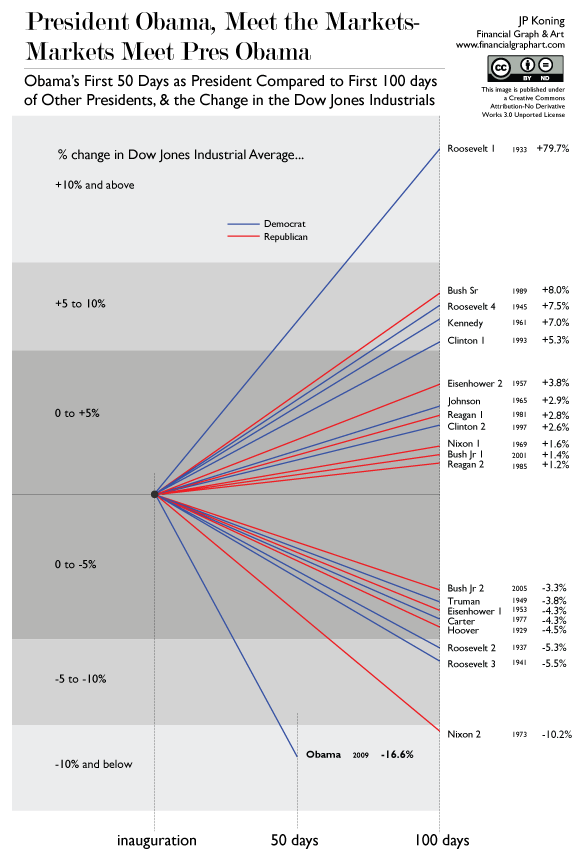
Obama, market's least favorite president so far - first 50 days - Ritholtz


Obama, market's least favorite president so far - great chart of all prez first 50 days...DOWN -16.6%

Monday, March 09, 2009

Calling techstartups - Nvidia kicks off global search for start-ups

* Nvidia starts program to invest in graphics start-ups
* Plans to invest $0.5-5 mln in promising technology
* Aims to boost applications that use its chips


"Nvidia (NVDA.O) plans to launch a program to invest in and spur development of up-and-coming graphics technologies and start-ups globally, hoping to shore up the firm's lead in a highly competitive graphics card arena.

The firm's worldwide GPU Ventures Program will fund and advise start-ups developing businesses around graphics processing, said Jeff Herbst, Nvidia's vice president of business development. Nvidia, which competes with Advanced Micro Devices (AMD.N)
subsidiary ATI, has funded start-ups before. Now, executives say they want to formalize and expand the process with a full-scale program.

Sunday, March 08, 2009

Odyssey Moon Limited

"Odyssey Moon Limited is a private commercial lunar enterprise headquartered in the Isle of Man involving partners in many nations. We are dedicated to the long term responsible development of the Moon for the benefit of all Humanity.

Odyssey Moon Ventures LLC is a U.S.-based company with offices in Washington, DC and Cocoa Beach, Florida, headed by former NASA Kennedy Space Center Director Jay Honeycutt. Odyssey Moon Ventures LLC is responsible for all Odyssey Moon U.S. programs and commercial launch operations, including the development and commercialization of innovative technologies for frequent, low cost and reliable access to the Moon."


More on the Blackberry app store

"The iPhone fanatics are already hard at work trying to dismiss and belittle it, but BlackBerry's new application store has some real potential. But before we condemn RIM for "copying" Apple, let's be realistic here. An application store for smartphone applications is just a good idea, and there is no reason why Apple should have the only one.

The pricing is different, which is causing some initial concern, since there will be no 99 cent apps on the BlackBerry App World. Instead, there are several pricing tiers, starting at $2.99. And yes, prices are a bit higher, but it's likely that the apps available will be of a whole different character. BlackBerry apps available on the site will be more business- and commerce-focused, rather than frivolous and fun, which is a big theme of many of the iPhone apps. Mind you, I like frivolous and fun, but would definitely pay a couple more dollars for an app that could actually help my business. "

NYTimes: BlackBerry to Open App Store

"BlackBerry is a step closer to opening its official applications store, to be called “BlackBerry App World.”

Cue fanfare of trumpets.

If you want to be alerted when the store goes live you can sign up here after 10 p.m. Eastern today.

The current BlackBerry site doesn’t sell apps, but has links to sites that do. The new App World will handle sales directly.

A spokesperson for Research In Motion, which makes the BlackBerry, was unable to answer by my posting time if this would affect the company’s relationship with Handango, which was a sort of unofficial BlackBerry app store. Handango had not returned my call by deadline. The BlackBerry app site has referred users to Handango in the past."

Seeo

"Seeo is developing advanced materials to revolutionize electricity storage and delivery. Please check back for updates to our web site,...."

Seeo, Inc, from California, is ready to manufacture a new type of lithium ion battery. Classic batteries are made from lithium cobalt oxide electrodes and a liquid electrolyte, usually lithium salts dissolved in an organic solvent. They are sealed hermetically and may catch fire and explode if overcharged, because the charged electrodes are very reactive with the liquid electrolyte, fact that also reduces their power and life cycle.


china daily: New VC funds mostly in yuan

China's venture capital (VC) market had 91 new funds in 2008, a 57 percent increase from 2007, according to a recent report released by EZCapital & HolyZone, a consulting firm.

The total amount raised by new funds in 2008 was around 264 billion yuan ($37.7 billion), up 347 percent on the previous year, according to the report.

techcrunch summary: Eric Schmidt interview on Charlie Rose

Does Google want to buy Twitter.

Eric Schmidt:
I shouldn’t talk about specific acquisitions. We’re unlikely to buy anything in the short term partly because I think prices are still high. And it’s unfortunate I think we’re in the middle of a cycle. Google is generating a lot of cash. And so we keep that cash in extremely secure banks.

Eric Schmidt:
Kindle, what have you. It’s worth noting, by the way, that if you imagine the power of these mobile devices over a five or 10 year period, they must be possible to do almost everything that we do today with other means. It should be possible to read books very well on those devices. Make it as fast as reading a magazine. It should be possible to watch television and watch your show routinely on these devices, in very high quality. The technology is just getting there. And when that occurs, it’s a different experience because it’s a personal experience. When I turn on the television, it shows the same shows that I saw yesterday and I watch them and it doesn’t know that I watched them yesterday. What a foolish television. Why is it not smarter?

Saturday, March 07, 2009

techcrunch: - twitter will have local news

"But Williams did share something worth noting at the end of the interview.

When asked about possible future features for Twitter, he reportedly said that one of the things being considered is an extension that lets people know what’s happening in their immediate vicinity. That would basically mean that Twitter could actively ping users about local events that are going on in their neighborhood, in real-time, based on the location they’ve indicated. As an example, Williams says users could be alerted to the fact a fire is burning a few streets away from where Twitter knows (or thinks) they are."

Friday, March 06, 2009

PEHUB: Lamond Opens Up: “If They Think It’s Acrimonious, That’s Sequoia’s Problem”

So why the antipathy, if there is any, between you and Sequoia?

That’s their problem if they think it’s acrimonious. I spent 27 years there and I do have quite a bit of interest left in the funds, so it’s not to my advantage to have an uncivil relationship with Sequoia.

Let’s talk more about your involvement now at Khosla Ventures. Will you more of less be making your own investments out of its offices?

I’ll do both my own investing, and I’ll do some investment with and for Khosla Ventures and in some cases, go on the board, representing Khosla. I’ll also, in some cases, invest alongside the firm. Vinod has offered me maximum flexibility, while at the same time, access to exceptional deal flow in high tech and clean tech. Time will tell if his firm is successful financially, but Vinod still has an excellent reputation and [that shows in the companies that come through the door].

So just to be clear, you are not a GP.

No.

Wednesday, March 04, 2009

Heard on the street - AIG

Biggest insurance fraud...according to Fast Money and many others


Tuesday, March 03, 2009

Dealbook - Another View: V.C. Investing Not Dead, Just Different

"The sum and substance of all of these developments is that the minimum economic level to bring a company public today is at least a $50 million offering at a $250 million market value. With realism back in the market and a return to rational metrics, like multiples of revenues and, better yet, profits, venture capitalists have had to face the hard reality that it is highly unlikely that taking a company from start-up to a point where it can justify this type of market capitalization in a three-, five- and even seven-year time frame is realistic, except in a limited number of situations.

For these reasons, I believe that the paradigm has changed for the venture business. We can no longer realistically expect the same kinds of absolute returns that were achieved in the past through a quick turnaround from start-up to liquidity through an I.P.O. Rather, I believe that most of the companies that venture capitalists are funding today will find an exit through merger or acquisition. And if we expect to achieve a return in a reasonable time frame of three to five years, we are probably looking at a sale price of $20 million to $100 million. This is the valuation range where most young companies are being acquired."

"To compensate for these lower gross return expectations, we must establish initial valuations, usually in the single digits, that can provide an adequate multiple return and internal rate of return. Inevitably, this suggests that a true venture capital firm should be reverting to smaller-scale funds and restricting individual investments in early-stage companies to accommodate the realities of the exit opportunity. Larger funds can focus on later-stage growth opportunities that can absorb greater amounts of capital where there still exists the possibility of taking companies public in a timely manner."