
Friday, November 30, 2007
Valleywag: Sean Parker, SnoCap and Cocaine
""There was a rumor floating around last year that Valley bad boy Sean Parker was forced out of startup Plaxo for cocaine..."


Thursday, November 29, 2007
Red Herring: Qwaq Nabs $7M in Funding
"Forget about long-distance travel just to sit in stuffy conference rooms so you can listen to mind-numbing PowerPoints. Qwaq lets your avatar suffer for you.
Qwaq, the creators of virtual spaces for the enterprise, on Tuesday said it snagged a $7 million first round of funding co-led by Alloy Ventures and Storm Ventures with participation from previous investor KPG Ventures. Ammar Hanafi, general partner at Alloy Ventures, and Alex Mendez, founding general partner at Storm Ventures, will also join Qwaq’s board of directors.
Gartner analyst Adam Sarner said that he thinks experimental money should be invested in this area.
“We visualize the world and communicate with each other in a 3-D context,” he said.
Mr. Sarner said that virtual worlds could be helpful for meet and greets and social situations, but they aren’t going to make sitting through a boring business meeting any less painless.
And “just because you can have a 3-D virtual world with funny shirts, doesn’t mean you should,” he said.
The Palo Alto, California-based startup plans to use the funds to expand its sales, marketing, product, and engineering teams and initiatives.
Qwaq brings together people and applications in an “environment that’s ‘realish,’ but the communication is real,” company CEO Greg Nuyens said.
Much like San Francisco, California-based Second Life, Qwaq Forums uses animated avatars representing users to populate 3-D office spaces, replete with rotating fans and potted plants. Only instead of being a time killer, Qwaq Forums aims to actually increase productivity.
Qwaq Forums, the company’s first product, is a secure virtual workspace application that brings people, documents, and applications together in one online location, as if they were in the same physical location.
Mr. Nuyens, who describes Second Life as a “fancy pick-up joint,” said that although Qwaq Forums is more focused on sharing documents, the social aspect is still important. “It isn’t one or the other. It’s about being able to do both in the same place,” he said.
Mr. Nuyens acknowledges Cisco Systems' WebEx is the 900-pound gorilla of web conferencing, but he said that Qwaq has an edge on WebEx by focusing on collaboration rather than presentations.
Qwaq charges a per person per month fee for its service. Customers include BP, Intel, HP, Stanford University’s Media X, and the Institute for Advanced Studies in Princeton, New Jersey.
With this new infusion of funding, Qwaq will have a chance to see if the average office worker thinks virtual workspaces are all they’re quacked up to be."

Qwaq, the creators of virtual spaces for the enterprise, on Tuesday said it snagged a $7 million first round of funding co-led by Alloy Ventures and Storm Ventures with participation from previous investor KPG Ventures. Ammar Hanafi, general partner at Alloy Ventures, and Alex Mendez, founding general partner at Storm Ventures, will also join Qwaq’s board of directors.
Gartner analyst Adam Sarner said that he thinks experimental money should be invested in this area.
“We visualize the world and communicate with each other in a 3-D context,” he said.
Mr. Sarner said that virtual worlds could be helpful for meet and greets and social situations, but they aren’t going to make sitting through a boring business meeting any less painless.
And “just because you can have a 3-D virtual world with funny shirts, doesn’t mean you should,” he said.
The Palo Alto, California-based startup plans to use the funds to expand its sales, marketing, product, and engineering teams and initiatives.
Qwaq brings together people and applications in an “environment that’s ‘realish,’ but the communication is real,” company CEO Greg Nuyens said.
Much like San Francisco, California-based Second Life, Qwaq Forums uses animated avatars representing users to populate 3-D office spaces, replete with rotating fans and potted plants. Only instead of being a time killer, Qwaq Forums aims to actually increase productivity.
Qwaq Forums, the company’s first product, is a secure virtual workspace application that brings people, documents, and applications together in one online location, as if they were in the same physical location.
Mr. Nuyens, who describes Second Life as a “fancy pick-up joint,” said that although Qwaq Forums is more focused on sharing documents, the social aspect is still important. “It isn’t one or the other. It’s about being able to do both in the same place,” he said.
Mr. Nuyens acknowledges Cisco Systems' WebEx is the 900-pound gorilla of web conferencing, but he said that Qwaq has an edge on WebEx by focusing on collaboration rather than presentations.
Qwaq charges a per person per month fee for its service. Customers include BP, Intel, HP, Stanford University’s Media X, and the Institute for Advanced Studies in Princeton, New Jersey.
With this new infusion of funding, Qwaq will have a chance to see if the average office worker thinks virtual workspaces are all they’re quacked up to be."
Wednesday, November 28, 2007
TTD: At The Churchill Club: AT&T CEO Randall Stephenson Says 3G Apple iPhone Coming Next Year
"On Wednesday night, AT&T (T) CEO Randall Stephenson is speaking at a Churchill Club dinner in Santa Clara, California. He is being interviewed by Quentin Hardy from Forbes. Among the topics: U-verse, regulation, and the 3G iPhone, which he says is coming some time next year. I’m blogging it live; I’ll post some bullet points as we go along.
Customers when they make a voice call in five years will be on whatever handset they are carrying; we’ll look for cheapest way to carry that call; in your house it will a VoIP call ultimately. People will be buying broadband and video from the same provider.
Since ‘96, ultimately buying AT&T, and bringing the wireless company into it; we’re saying we’ll take $9 billion of run rate costs out of this business. It is possible because the businesses grew up because of the regulatory framework…regulators did not want all that together. The rules are coming down. The cost structure fundamentally changes; approach to the market changes. Service gets cheaper, experience gets better.
Measuring success: close to a quarter of a million devices on the network. How many devices are hanging on this network is a measure of success.
Is this a commodity business? It has always been a commodity business. We move ones and zeros around the world, better than anyone else does it. It takes $18.5 billion of capital to do that every year…I want it to be lower. You have to have scale to make money in a commodity business. Scale is critical.
Who is important partner for you? Carlos Slim at America Movil. IBM. Obviously, Apple is a critical partner. And down from there.
New competitors? Google is a new one. Competitors change over time.
On Verizon opening the network: I think it was overblown. Go back in time, the wireline network became open, the broadband network, the same thing. We are one of the most open networks in the world. All the handsets we sell are Java equipped. If you want to buy handset without a contract, fine, just pay retail price for the handset. We feel like we are a very open network, and will continue to be.
End of the subsidized handset? Interestingly enough, we are in the business to make money. We have this model of subsidized handsets…the iPhone is the first shot across the bow. Make a device you can sell for a profit, and you can have the deal.
On the model with Apple: Won’t disclose how much they share with Apple in terms of revenue.
On the iPhone: told me that the way the industry has gone at the handset business has been so poorly done. Here is company with software intensive handset, and the quality is the best device we had. Not just going to just change the game in usability, also will change game in terms of quality.
On Google handset alliance. Six operating systems out today. Blackberry, Microsoft, Symbian, Palm. Here is new entrant that has never made an operating system. Will be interesting to see if they can develop a world-class operating system. If our customers want the phone, great. Our customers don’t say I want that operating system, they said they want a particular phone.
What does this do to the price of handsets? For wired phone, it costs $4.99. Price points of wireless handsets have to come down.
Quentin is asking him about U-verse. What is the vision: Stephenson said they had fundamental decision to make. Choice: proven technology, the cable model. Or IP model. Traditional cable model, all chasing this idea of biggest pipe into the house you possibly could. In cable model, sending 300-400 channels down the pipe at one time. IP model is just send the channel you want. So first thing was getting to Internet Protocol, suddenly you can get away with smaller pipe. Did that on TV; broadband is all IP; putting 3G throughout our wireless network. Once content in IP format, you can delivery anywhere you want as long as you have an IP device.
U-verse will be at 8 million customers by end of this year. Turning on one market every month. Turned on Austin this week. Dropped number from 18 million to 17 million by end of 2008.
Will Verizon have stronger network with fiber to the home? They wanted the big pipe into the house, we wanted IP. You get their quicker, with broader coverage. We have 30 million homes in our footprint; we want to offer it to most of them.
Will pricing come down? Well, competition has that effect. My prediction, selling TV service out of mobility stores here. Average household spend $127 a month on wireless. With broadband that becomes $200.
What else to buy or build? Voice minutes still growing at 10% every year. Mostly wireless. Broadband growing 40% consumer, 60% business. What do you need? The bandwidth glut of 1990s is gone. We are not completely obsoleting our IP backbone network.
On the 700 MHz auction: It is beach front property. It doesn’t get any better than this. (They will be bidding.)
Biggest threats: regulation. Mark my words, I will never ask the government to come regulate our business. If I had my wish, the government would just stay our of our business…Keep the government out of this, and investment will follow….it ought to be a mindset of deregulation in the industry…let the markets work.
Net Neutrality: It’s regulation.
National security and turning over phone records to the government: we are very limited on what we can talk about in these kinds of matters. Is agency entitled to the information, do they have the authority, whether a court order, or a warrant.
The 3g iPhone, when? You will have it next year, he says. "
Customers when they make a voice call in five years will be on whatever handset they are carrying; we’ll look for cheapest way to carry that call; in your house it will a VoIP call ultimately. People will be buying broadband and video from the same provider.
Since ‘96, ultimately buying AT&T, and bringing the wireless company into it; we’re saying we’ll take $9 billion of run rate costs out of this business. It is possible because the businesses grew up because of the regulatory framework…regulators did not want all that together. The rules are coming down. The cost structure fundamentally changes; approach to the market changes. Service gets cheaper, experience gets better.
Measuring success: close to a quarter of a million devices on the network. How many devices are hanging on this network is a measure of success.
Is this a commodity business? It has always been a commodity business. We move ones and zeros around the world, better than anyone else does it. It takes $18.5 billion of capital to do that every year…I want it to be lower. You have to have scale to make money in a commodity business. Scale is critical.
Who is important partner for you? Carlos Slim at America Movil. IBM. Obviously, Apple is a critical partner. And down from there.
New competitors? Google is a new one. Competitors change over time.
On Verizon opening the network: I think it was overblown. Go back in time, the wireline network became open, the broadband network, the same thing. We are one of the most open networks in the world. All the handsets we sell are Java equipped. If you want to buy handset without a contract, fine, just pay retail price for the handset. We feel like we are a very open network, and will continue to be.
End of the subsidized handset? Interestingly enough, we are in the business to make money. We have this model of subsidized handsets…the iPhone is the first shot across the bow. Make a device you can sell for a profit, and you can have the deal.
On the model with Apple: Won’t disclose how much they share with Apple in terms of revenue.
On the iPhone: told me that the way the industry has gone at the handset business has been so poorly done. Here is company with software intensive handset, and the quality is the best device we had. Not just going to just change the game in usability, also will change game in terms of quality.
On Google handset alliance. Six operating systems out today. Blackberry, Microsoft, Symbian, Palm. Here is new entrant that has never made an operating system. Will be interesting to see if they can develop a world-class operating system. If our customers want the phone, great. Our customers don’t say I want that operating system, they said they want a particular phone.
What does this do to the price of handsets? For wired phone, it costs $4.99. Price points of wireless handsets have to come down.
Quentin is asking him about U-verse. What is the vision: Stephenson said they had fundamental decision to make. Choice: proven technology, the cable model. Or IP model. Traditional cable model, all chasing this idea of biggest pipe into the house you possibly could. In cable model, sending 300-400 channels down the pipe at one time. IP model is just send the channel you want. So first thing was getting to Internet Protocol, suddenly you can get away with smaller pipe. Did that on TV; broadband is all IP; putting 3G throughout our wireless network. Once content in IP format, you can delivery anywhere you want as long as you have an IP device.
U-verse will be at 8 million customers by end of this year. Turning on one market every month. Turned on Austin this week. Dropped number from 18 million to 17 million by end of 2008.
Will Verizon have stronger network with fiber to the home? They wanted the big pipe into the house, we wanted IP. You get their quicker, with broader coverage. We have 30 million homes in our footprint; we want to offer it to most of them.
Will pricing come down? Well, competition has that effect. My prediction, selling TV service out of mobility stores here. Average household spend $127 a month on wireless. With broadband that becomes $200.
What else to buy or build? Voice minutes still growing at 10% every year. Mostly wireless. Broadband growing 40% consumer, 60% business. What do you need? The bandwidth glut of 1990s is gone. We are not completely obsoleting our IP backbone network.
On the 700 MHz auction: It is beach front property. It doesn’t get any better than this. (They will be bidding.)
Biggest threats: regulation. Mark my words, I will never ask the government to come regulate our business. If I had my wish, the government would just stay our of our business…Keep the government out of this, and investment will follow….it ought to be a mindset of deregulation in the industry…let the markets work.
Net Neutrality: It’s regulation.
National security and turning over phone records to the government: we are very limited on what we can talk about in these kinds of matters. Is agency entitled to the information, do they have the authority, whether a court order, or a warrant.
The 3g iPhone, when? You will have it next year, he says. "
Monday, November 26, 2007
avc: Sequoia Capital and everyone else
"This weekend I became a fan of Sequioa Capital on Facebook. They only have 14 fans, so if you are a fan like me go join their page.
Why am I a fan of Sequoia? Because they are simply the best venture capital firm in the business right now. They are doing it right. And it's impressive to watch.
On that subject, I wrote a post on the Union Square Ventures weblog this morning talking about why the best firms in the venture capital business have an advantage over everyone else. If you invest in venture capital funds or take money from them, it's worth reading and commenting on."
------------
"If you look at the most successful venture capital firms, you will see that they are usually early stage investors who often are the first institutional money into an investment, the way Kleiner and Sequoia were in Google. Getting that place in the capital structure in an early stage investment is important because it provides access to the management and business that later round investors don't get. Look at the role Accel now has at Facebook. They are involved deeply in the strategic and business decisions that the management of Facebook makes. What comes with that kind of access is a level of knowledge and understanding about an emerging market that you just cannot get sitting on the outside looking in.
The best venture capital investors/firms use their engagement with their portfolio companies and all the entrepreneurs they meet to become smarter about the markets they invest in. Kleiner and Sequoia certainly got to see the search marketing business developing before most other investors did. Accel (and Greylock and Peter Thiel) will certainly understand how social advertising is developing better than most of us on the outside. These insights are incredibly valuable and should lead to a host of additional investments."
Why am I a fan of Sequoia? Because they are simply the best venture capital firm in the business right now. They are doing it right. And it's impressive to watch.
On that subject, I wrote a post on the Union Square Ventures weblog this morning talking about why the best firms in the venture capital business have an advantage over everyone else. If you invest in venture capital funds or take money from them, it's worth reading and commenting on."
------------
"If you look at the most successful venture capital firms, you will see that they are usually early stage investors who often are the first institutional money into an investment, the way Kleiner and Sequoia were in Google. Getting that place in the capital structure in an early stage investment is important because it provides access to the management and business that later round investors don't get. Look at the role Accel now has at Facebook. They are involved deeply in the strategic and business decisions that the management of Facebook makes. What comes with that kind of access is a level of knowledge and understanding about an emerging market that you just cannot get sitting on the outside looking in.
The best venture capital investors/firms use their engagement with their portfolio companies and all the entrepreneurs they meet to become smarter about the markets they invest in. Kleiner and Sequoia certainly got to see the search marketing business developing before most other investors did. Accel (and Greylock and Peter Thiel) will certainly understand how social advertising is developing better than most of us on the outside. These insights are incredibly valuable and should lead to a host of additional investments."
Intuit Buys Homestead for $170 Million.....10 yrs later
"Intuit Inc. said Monday that it's buying Homestead Technologies Inc. for $170 million in a deal that will provide the financial management software maker with more online tools to sell to small businesses.
Menlo Park-based Homestead specializes in helping small businesses design and run their Web sites. The acquisition is part of Intuit's effort to diversify beyond its popular Quicken and TurboTax programs, which are already popular with small businesses.
Mountain View-based Intuit expects the deal to decrease its earnings slightly during its fiscal years ending in July 2008 and 2009. The acquisition is scheduled to close early in 2008."
Menlo Park-based Homestead specializes in helping small businesses design and run their Web sites. The acquisition is part of Intuit's effort to diversify beyond its popular Quicken and TurboTax programs, which are already popular with small businesses.
Mountain View-based Intuit expects the deal to decrease its earnings slightly during its fiscal years ending in July 2008 and 2009. The acquisition is scheduled to close early in 2008."
Monday, November 19, 2007
PaidContent: Facebook ‘Offers $85 Million’ For Chinese Social Net Zhanzuo: Report
"Facebook has offered $85 million for college social network Zhanzuo, buying its way in to the lucrative Chinese market, Britain’s The Times reports, without attributing a source. On the record, Facebook only said Zhanzuo CEO Jack Zhang and Facebook founder Mark Zuckerberg ”were acquainted but this did not mean that they intended to reach a deal”: “There could be more information by the end of the month”.
Look to last week’s Times report on the subject, however, and the story is build, not buy: Then, Facebook denied claims in the Chinese press it had made (and had rejected) an offer for Zhanzuo of “up to $100 million”, saying: “Facebook has no plans to acquire any company in China. In the coming months, internationalization of the Facebook website is priority and those efforts will support multiple markets around the world.” For his part, Zhanzuo’s Zhang said Facebook wouldn’t be a threat on his home turf.
Funded by Sequoia and Morningside, Zhanzuo claims over seven million users and appears to have courted a Facebook tie-up for a while - its about page makes a direct comparison. But a greater pretender to the throne is Xiaonei, with over eight million users (if their copycat design isn’t begging for Zuckerberg’s interest, I don’t know what is). China’s consumer-to-consumer market grew 16.4 percent to 12.29 billion RMB ($1.65 billion) in Q3, according to Analysys International.
Update: An “unnamed insider” tells Sina (NSDQ: SINA) (via PacificEpoch) Zhanzuo will, in fact, take second-round funding of $7.2 million at the end of the month - the round involving first-round backer Sequoia. So all very speculative so far. "

Look to last week’s Times report on the subject, however, and the story is build, not buy: Then, Facebook denied claims in the Chinese press it had made (and had rejected) an offer for Zhanzuo of “up to $100 million”, saying: “Facebook has no plans to acquire any company in China. In the coming months, internationalization of the Facebook website is priority and those efforts will support multiple markets around the world.” For his part, Zhanzuo’s Zhang said Facebook wouldn’t be a threat on his home turf.
Funded by Sequoia and Morningside, Zhanzuo claims over seven million users and appears to have courted a Facebook tie-up for a while - its about page makes a direct comparison. But a greater pretender to the throne is Xiaonei, with over eight million users (if their copycat design isn’t begging for Zuckerberg’s interest, I don’t know what is). China’s consumer-to-consumer market grew 16.4 percent to 12.29 billion RMB ($1.65 billion) in Q3, according to Analysys International.
Update: An “unnamed insider” tells Sina (NSDQ: SINA) (via PacificEpoch) Zhanzuo will, in fact, take second-round funding of $7.2 million at the end of the month - the round involving first-round backer Sequoia. So all very speculative so far. "
CNET: Will e-books ever be a best-seller?
"The average commuter seems to be doing OK reading an old-fashioned newspaper on the way to work.
Why, then, do Amazon.com and Sony think they need to replace traditional books with electronic readers?
On Monday, Amazon unveiled the Kindle, a $399 handheld device that can download digital books, newspapers, and magazines from the Internet. Like the name suggests, Kindle is Amazon's way of burning down the traditional paperback book business.
Just last month, Sony launched an upgraded version of its Sony Reader.
Sony and Amazon apparently think the public finally is ready to trade its paperbacks in for more computer screens, even though various attempts to do this have largely failed for a decade.
The Wall Street Journal quoted an executive from Rosetta Books last week who estimated that e-book sales range between $15 million and $25 million annually. That would be a tiny portion of the $25 billion in revenues the publishing industry generated last year.
So what tea leaves are these companies reading to convince them that consumers are finally ready to go digital with their books? "
Why, then, do Amazon.com and Sony think they need to replace traditional books with electronic readers?
On Monday, Amazon unveiled the Kindle, a $399 handheld device that can download digital books, newspapers, and magazines from the Internet. Like the name suggests, Kindle is Amazon's way of burning down the traditional paperback book business.
Just last month, Sony launched an upgraded version of its Sony Reader.
Sony and Amazon apparently think the public finally is ready to trade its paperbacks in for more computer screens, even though various attempts to do this have largely failed for a decade.
The Wall Street Journal quoted an executive from Rosetta Books last week who estimated that e-book sales range between $15 million and $25 million annually. That would be a tiny portion of the $25 billion in revenues the publishing industry generated last year.
So what tea leaves are these companies reading to convince them that consumers are finally ready to go digital with their books? "
Sunday, November 18, 2007
The Layoff League Tables
"This hasn’t been a good second half of the year for investment banks. Rocked by the summer’s troubles in the credit market — the subprime mortgage meltdown, the drought of buyers for leveraged loans — firms across Wall Street and around the world felt the pain, which has become apparent through billions of dollars in writedowns.
And with that have come large numbers of layoffs. To help sort through the mess, DealBook has compiled a sort of reverse league table, where being at the top is not something to boast about.
From Bear Stearns to Barclays, most of the major banks have resorted to job cuts in some form since the summer. More will probably follow. After his company announced a 93 percent drop in profits at its investment bank last week, Bank of America’s chief executive, Kenneth Lewis, said on a conference call that he will probably take on major cost-cutting. “I’ve had all the fun I can stand in investment banking right now,” he said.
(On Monday, Bank of America said that its head of structured products was leaving. On Wednesday, the bank announced it would layoff 3,000 employees.)
As The New York Times reported Monday, 42,404 financial jobs have been cut at New York firms this year, according to the job-placement consulting firm Challenger, Gray & Christmas.
Most of that number doesn’t necessarily relate to the summer’s credit crunch; about half stems from a broad restructuring that Citigroup announced this spring. More recently, though, most of the cuts made by investment banks have been tied to losses in debt-related operations, such as structured credit and leveraged finance. Many of the investment banks’ job cuts have been outside New York, such as HSBC’s shuttering of its U.S. mortgage unit in Indiana.
The layoffs have climbed high up the totem pole: They include the firings of top executives at Merrill Lynch and UBS. With some banks having yet to report their third-quarter earnings, many fear that more pink slips are being drawn up.
Still, a few banks have managed to avoid hitting this list so far. Perhaps most notably, the firm that reported a 79 percent increase in profit comes to mind.
Some notes: The figures in the table below come from reported job losses since the summer, nearly all of which the banks have attributed to weakness in their debt-related operations. Also, thanks to some readers’ comments, we added Wachovia to the table Tuesday morning."
And with that have come large numbers of layoffs. To help sort through the mess, DealBook has compiled a sort of reverse league table, where being at the top is not something to boast about.
From Bear Stearns to Barclays, most of the major banks have resorted to job cuts in some form since the summer. More will probably follow. After his company announced a 93 percent drop in profits at its investment bank last week, Bank of America’s chief executive, Kenneth Lewis, said on a conference call that he will probably take on major cost-cutting. “I’ve had all the fun I can stand in investment banking right now,” he said.
(On Monday, Bank of America said that its head of structured products was leaving. On Wednesday, the bank announced it would layoff 3,000 employees.)
As The New York Times reported Monday, 42,404 financial jobs have been cut at New York firms this year, according to the job-placement consulting firm Challenger, Gray & Christmas.
Most of that number doesn’t necessarily relate to the summer’s credit crunch; about half stems from a broad restructuring that Citigroup announced this spring. More recently, though, most of the cuts made by investment banks have been tied to losses in debt-related operations, such as structured credit and leveraged finance. Many of the investment banks’ job cuts have been outside New York, such as HSBC’s shuttering of its U.S. mortgage unit in Indiana.
The layoffs have climbed high up the totem pole: They include the firings of top executives at Merrill Lynch and UBS. With some banks having yet to report their third-quarter earnings, many fear that more pink slips are being drawn up.
Still, a few banks have managed to avoid hitting this list so far. Perhaps most notably, the firm that reported a 79 percent increase in profit comes to mind.
Some notes: The figures in the table below come from reported job losses since the summer, nearly all of which the banks have attributed to weakness in their debt-related operations. Also, thanks to some readers’ comments, we added Wachovia to the table Tuesday morning."
Monday, November 12, 2007
Al Gore joins Kleiner Perkins to save the planet - Nov. 12, 2007
"It's lunchtime on Sand Hill Road, and Al Gore wants answers. "How does the efficiency decline with latitude?" he asks. "What size community could be served by one plant? If a manufacturer like GE wanted to make smaller turbines, would the technology support a smaller scale?"
We're sitting in the giant conference room at Kleiner Perkins Caufield & Byers, where the partners hold their weekly meetings. After loading his plate with Chinese food from a buffet, Gore is firing detailed questions at the management team of Ausra, a Kleiner-backed company in Palo Alto whose technology uses mirrors the width of a flatbed truck that focus the sun's energy to generate electricity.
Once Gore is satisfied -- sunlight lags north of South Dakota, an Ausra plant can serve 120,000 homes, and yes, smaller turbines will work fine -- he shifts from inquisitor to fixer. He was chatting with California Senator Barbara Boxer "on the way over," he reports, and he isn't optimistic that Congress will extend the tax credits Ausra has been relying on. On the upside, he offers on the spot to organize a summit highlighting the company's solar thermal technology to educate lawmakers and other policymakers on its potential. He also thinks a powwow at General Electric (Charts, Fortune 500) would be beneficial, even though Ausra is a tiny customer."

We're sitting in the giant conference room at Kleiner Perkins Caufield & Byers, where the partners hold their weekly meetings. After loading his plate with Chinese food from a buffet, Gore is firing detailed questions at the management team of Ausra, a Kleiner-backed company in Palo Alto whose technology uses mirrors the width of a flatbed truck that focus the sun's energy to generate electricity.
Once Gore is satisfied -- sunlight lags north of South Dakota, an Ausra plant can serve 120,000 homes, and yes, smaller turbines will work fine -- he shifts from inquisitor to fixer. He was chatting with California Senator Barbara Boxer "on the way over," he reports, and he isn't optimistic that Congress will extend the tax credits Ausra has been relying on. On the upside, he offers on the spot to organize a summit highlighting the company's solar thermal technology to educate lawmakers and other policymakers on its potential. He also thinks a powwow at General Electric (Charts, Fortune 500) would be beneficial, even though Ausra is a tiny customer."
Sunday, November 11, 2007
Which company best nurtures upstart acquisitions: Yahoo or Google?
"The favored exit strategy for internet startups is no longer an IPO but a splashy acquisition - preferably by Yahoo or Google. Head-to-head, how successful have Google and Yahoo been at advancing their purchases? Take a peek at FSB's scorecard. "
Infoweek: 9 Questions To Ask A Tech Startup
"IT departments shouldn't ignore startup companies, but they must exercise rigorous due diligence before jumping in with both feet. Here are some key questions to ask market newcomers:
What's your background?
This applies to the founders and key executives, as well as the company itself (some are recast after initial failure). Look for people with deep technical expertise and past startup successes.
When was your company formed?
Anything less than two years is cause for caution; beyond that, there should be signs of maturity in terms of management team, funding, and product development.
How are you funded?
There's no wrong answer to this question, but it helps to know if a company is bootstrapped or if it has received outside funding and, if so, how much. A company with $500,000 in angel funding isn't as far along as one that has secured $20 million through two venture capital rounds.
Can I talk to an early customer?
Fellow IT pros will almost always tell you things, good and bad, about a startup's technology and customer support that you won't hear from the company itself.
Who are your competitors?
Some startups don't like to answer this question, but the smart ones will be open and honest. Companies that acknowledge the alternatives can tell you why their approach is best.
What's the road map?
One of the benefits of working with a startup is that you should get ready access to the company's top techies--the CTO, for example, or director of engineering. As an early adopter, you're in a position to influence what comes next.
How do you make money?
It's great that new business models let some startups share their products for little or nothing, but it's worth knowing just how the company plans to grow into a viable long-term player. If you don't get a clear answer, it's a sign that the business model isn't fully baked.
Do you expect to be acquired?
Any startup with a business plan has an exit strategy. That's OK. It just helps to know, so you're not surprised if Oracle (NSDQ: ORCL) comes swooping in.
Can we meet?
You can learn a lot about a company in a face-to-face visit. Even early-stage companies should exude business savvy and give you a sense that they understand what your IT department is up against. If Fido is panting at the founder's feet, give him a biscuit--not an enterprise license."
What's your background?
This applies to the founders and key executives, as well as the company itself (some are recast after initial failure). Look for people with deep technical expertise and past startup successes.
When was your company formed?
Anything less than two years is cause for caution; beyond that, there should be signs of maturity in terms of management team, funding, and product development.
How are you funded?
There's no wrong answer to this question, but it helps to know if a company is bootstrapped or if it has received outside funding and, if so, how much. A company with $500,000 in angel funding isn't as far along as one that has secured $20 million through two venture capital rounds.
Can I talk to an early customer?
Fellow IT pros will almost always tell you things, good and bad, about a startup's technology and customer support that you won't hear from the company itself.
Who are your competitors?
Some startups don't like to answer this question, but the smart ones will be open and honest. Companies that acknowledge the alternatives can tell you why their approach is best.
What's the road map?
One of the benefits of working with a startup is that you should get ready access to the company's top techies--the CTO, for example, or director of engineering. As an early adopter, you're in a position to influence what comes next.
How do you make money?
It's great that new business models let some startups share their products for little or nothing, but it's worth knowing just how the company plans to grow into a viable long-term player. If you don't get a clear answer, it's a sign that the business model isn't fully baked.
Do you expect to be acquired?
Any startup with a business plan has an exit strategy. That's OK. It just helps to know, so you're not surprised if Oracle (NSDQ: ORCL) comes swooping in.
Can we meet?
You can learn a lot about a company in a face-to-face visit. Even early-stage companies should exude business savvy and give you a sense that they understand what your IT department is up against. If Fido is panting at the founder's feet, give him a biscuit--not an enterprise license."
Monday, November 05, 2007
Alibaba soars 164.81% in IPO debut
"Alibaba.com Ltd. more than doubled on its first day of trading in Hong Kong to become Asia's second-biggest Internet company by market value after Yahoo Japan Corp.
The Web company that counts Cisco Systems Inc. and Yahoo! Inc. as shareholders rose to HK$33.00 from the offer price of HK$13.50 as of 11:44 a.m., valuing the Hangzhou, eastern China- based company at about $21.5 billion.
Alibaba, China's largest online trading site for companies, predicts profit will triple this year on increased spending to market goods and services in the world's fastest growing major economy. Today's gain underscores demand for shares of Chinese companies, a day after PetroChina Co. became the world's first $1 trillion company on its Shanghai trading debut.
``This company is coming along with good growth expectations,'' said Gabriel Gondard, who manages about $10 billion at Societe Generale venture Fortune SGAM Fund Management Co. in Shanghai. ``It's an area where the Chinese market isn't saturated,'' he said before trading started today.
The IPO price valued Alibaba at almost 66 times its projected 2008 earnings as estimated by the investment banks arranging the sale.
That compares with about 56 times for Tencent Holdings Ltd., operator of China's most popular Internet chat service, and about 117 times for Baidu.com Inc., according to data compiled by Bloomberg. Beijing-based Baidu is the provider of the country's most-used Internet search engine. "
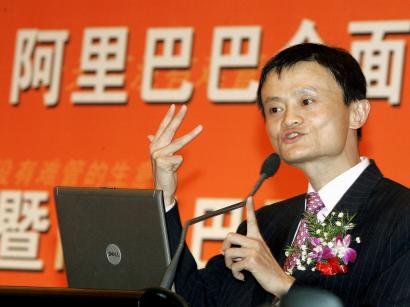
The Web company that counts Cisco Systems Inc. and Yahoo! Inc. as shareholders rose to HK$33.00 from the offer price of HK$13.50 as of 11:44 a.m., valuing the Hangzhou, eastern China- based company at about $21.5 billion.
Alibaba, China's largest online trading site for companies, predicts profit will triple this year on increased spending to market goods and services in the world's fastest growing major economy. Today's gain underscores demand for shares of Chinese companies, a day after PetroChina Co. became the world's first $1 trillion company on its Shanghai trading debut.
``This company is coming along with good growth expectations,'' said Gabriel Gondard, who manages about $10 billion at Societe Generale venture Fortune SGAM Fund Management Co. in Shanghai. ``It's an area where the Chinese market isn't saturated,'' he said before trading started today.
The IPO price valued Alibaba at almost 66 times its projected 2008 earnings as estimated by the investment banks arranging the sale.
That compares with about 56 times for Tencent Holdings Ltd., operator of China's most popular Internet chat service, and about 117 times for Baidu.com Inc., according to data compiled by Bloomberg. Beijing-based Baidu is the provider of the country's most-used Internet search engine. "
Sunday, November 04, 2007
GPS on steep ramp in cellphones
"The number of cellphones with global positioning satellite capabilities will more than quadruple between 2006 and 2011. The U.S. government's mandate for Emergency 911 services and the rollout by carriers of new location-based services are driving the growth, according to a report released by iSuppli Corp. on Thursday (Nov.1).
GPS-equipped mobile handset shipments will rise to 444 million units by 2011 from 109.6 million units in 2006, the market watcher forecasted. That means by 2011, 29.6 percent of all mobile phones shipped will have GPS capability, up from 11.1 percent in 2006.
The report was issued the same day Swiss GPS chipset and modules group u-Blox Holding AG raised Swiss Francs 135.6 million ($116.5 million) in an IPO on the Swiss stock exchange. U-Blox (Thalwil, Switzerland) had raised over $17 million in venture funding since 2000, from 3i Group, Partners Group and Innoventure Equity Partners.
"Mobile-handset OEMs increasingly are investigating the integration of GPS functionality in mobile devices as a value-added product differentiator," said Tina Teng, wireless analyst at iSuppli (El Segundo, Calif.), speaking in a prepared statement. "Wireless carriers are looking at introducing various new GPS-based services to increase their Average Revenue Per User," she added.
Location-based services span a broad range of GPS-enabled applications that typically tap into location databases. At a recent cellular conference in San Francisco, GPS chip designer Sirf Technology held a summit intended to fuel what has been to date a slow rise for location services. "
GPS-equipped mobile handset shipments will rise to 444 million units by 2011 from 109.6 million units in 2006, the market watcher forecasted. That means by 2011, 29.6 percent of all mobile phones shipped will have GPS capability, up from 11.1 percent in 2006.
The report was issued the same day Swiss GPS chipset and modules group u-Blox Holding AG raised Swiss Francs 135.6 million ($116.5 million) in an IPO on the Swiss stock exchange. U-Blox (Thalwil, Switzerland) had raised over $17 million in venture funding since 2000, from 3i Group, Partners Group and Innoventure Equity Partners.
"Mobile-handset OEMs increasingly are investigating the integration of GPS functionality in mobile devices as a value-added product differentiator," said Tina Teng, wireless analyst at iSuppli (El Segundo, Calif.), speaking in a prepared statement. "Wireless carriers are looking at introducing various new GPS-based services to increase their Average Revenue Per User," she added.
Location-based services span a broad range of GPS-enabled applications that typically tap into location databases. At a recent cellular conference in San Francisco, GPS chip designer Sirf Technology held a summit intended to fuel what has been to date a slow rise for location services. "
Saturday, November 03, 2007
SiliconAlley: Fred Wilson: How to Say "We're Just Not That Into You"
"SAI contributor and USV partner Fred Wilson explains that a huge part of his job is saying "No." Unlike some investors, he feels bad enough about doing this that he usually takes a few minutes to do it. Even when the problem is not the idea, but the entrepreneur (you). So don't shoot the messenger!
Saying No
That's what I do all day. Every day. Dozens of times a day. I try to reply to every email from every entrepreneur who sends us an investment opportunity. I don't achieve that goal and sometimes I don't even get close.
But at least half the time, probably 2/3 of the time, I just reply with a no. And I try to explain in each and every one why the answer is no. Because email is time consuming, the explanation is often one or two lines. Something like "it doesn't fit into our investment strategy" or "we don't invest in content businesses" or "it's too early state" or "it's too late stage". I realize that these reasons are barely useful. But at least it's better than "no thanks"..."

Saying No
That's what I do all day. Every day. Dozens of times a day. I try to reply to every email from every entrepreneur who sends us an investment opportunity. I don't achieve that goal and sometimes I don't even get close.
But at least half the time, probably 2/3 of the time, I just reply with a no. And I try to explain in each and every one why the answer is no. Because email is time consuming, the explanation is often one or two lines. Something like "it doesn't fit into our investment strategy" or "we don't invest in content businesses" or "it's too early state" or "it's too late stage". I realize that these reasons are barely useful. But at least it's better than "no thanks"..."
Subscribe to:
Posts (Atom)